As a veteran with over 15 years in the kitchen appliance trenches and a proud content creator for gooau.com, I’ve seen countless cooking innovations come and go. But few have transformed the home kitchen quite like the induction hob. If you’re looking to buy an induction hob, you’re not just getting a new appliance; you’re stepping into a world of speed, precision, and efficiency that makes cooking a pure joy. This guide, straight from our experts at Gooau, will walk you through everything you need to know to make the best choice for your kitchen, from understanding the core technology to picking the perfect model that fits your lifestyle.
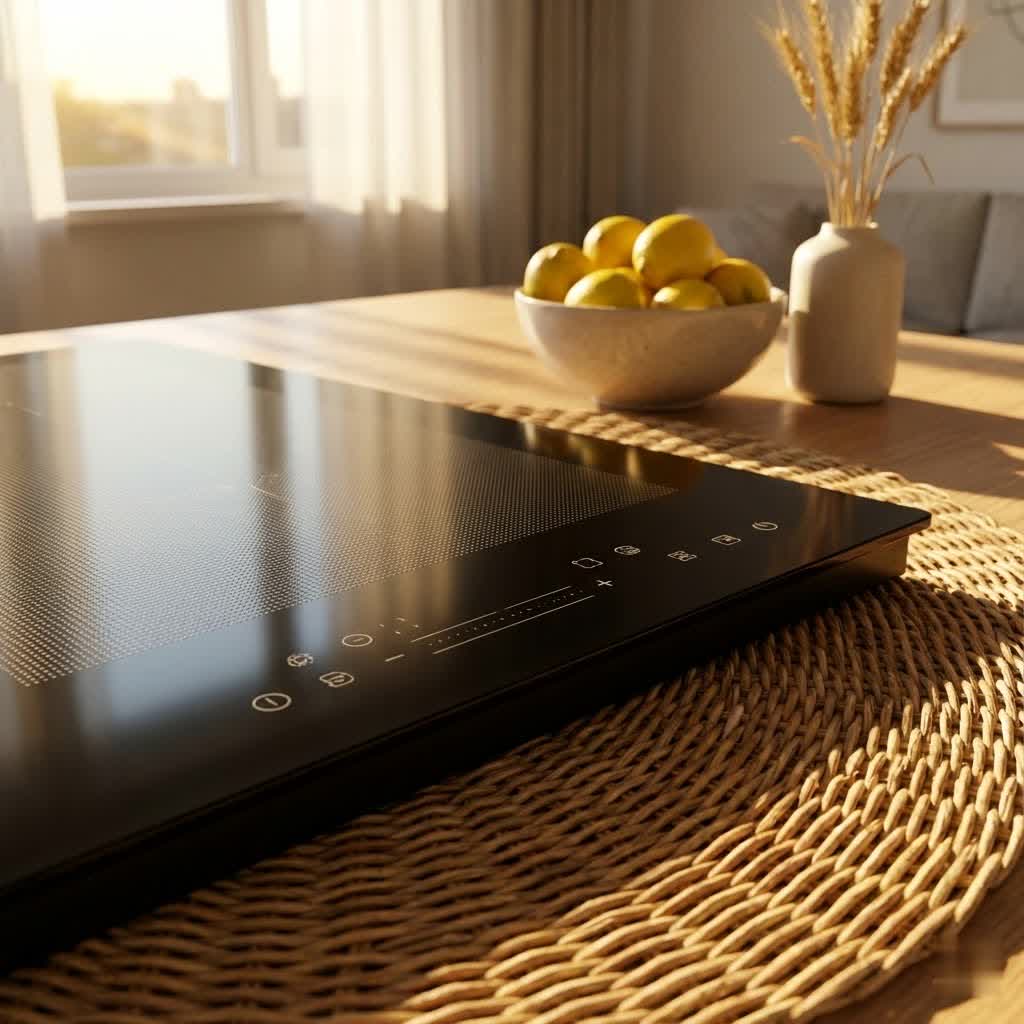
Understanding Induction Hobs: The Power Behind the Pan
So, what exactly is an induction hob, and how does it work its magic? Unlike traditional gas or electric hobs that heat the cooking surface, induction technology uses electromagnetic fields to directly heat your cookware. Think of it like this: beneath the sleek, smooth surface of the hob, a copper coil creates a fluctuating magnetic field. When you place a compatible pot or pan on the zone, this field induces tiny electrical currents within the cookware itself, generating heat inside the pan. The hob surface stays relatively cool to the touch, making it incredibly safe and efficient.
This direct heating method brings a cascade of benefits to your kitchen:
- Lightning-Fast Heating: Water boils in a flash, and pans heat up almost instantly, cutting down your cooking time significantly.
- Exceptional Energy Efficiency: Since heat is generated directly in the pan, there’s minimal energy wasted into the air, making induction hobs remarkably economical to run.
- Pinpoint Temperature Control: Imagine adjusting the heat with the same precision as a gas flame, but even faster. Induction responds instantly, allowing for delicate simmering or fierce searing with ease.
- Enhanced Safety: With the hob surface remaining cool, the risk of accidental burns is drastically reduced, a huge plus for families.
- Effortless Cleaning: Spills don’t bake onto a hot surface, so a simple wipe with a cloth is often all it takes to keep your hob sparkling.
When you’re ready to buy an induction hob, these fundamental advantages are what you’re truly investing in.
What to Consider Before You Buy: A Gooau.com Checklist
Choosing the right induction hob can feel a bit like orchestrating a symphony – every component needs to play its part in harmony. Here’s our expert checklist to guide you when you decide to buy an induction hob:
Size and Number of Cooking Zones: Matching Your Culinary Needs
Induction hobs come in a variety of sizes and zone configurations. From compact two-zone models perfect for smaller kitchens or single cooks, to expansive five or six-zone units designed for bustling family meals and serious entertainers.
- Standard Sizes: Commonly range from 30cm (domino hobs) to 90cm or more. Measure your available countertop space carefully to ensure a perfect fit.
- Flexible and Bridging Zones: Many modern induction hobs offer flexible cooking zones that can adapt to larger or irregularly shaped pans, or “bridging” functions that combine two zones into one. This is a game-changer for griddle pans or oversized pots.
|
Our Picks for the Best Induction Hob in 2026
As an Amazon Associate I earn from qualifying purchases.
|
||
| Num | Product | Action |
|---|---|---|
| 1 | AMZCHEF Portable-Induction-Cooktop: 74 Temperature Levels Induction Burner with Digital Probe, 1800W Countertop Burner with 20 Power Levels, 6.5\" Heating Coil, Low Noise Electric Cooktops with Timer |

|
| 2 | LỖI |
|
| 3 | Duxtop Portable Induction Cooktop Burner, Induction Hot Plate with LCD Sensor Touch 1800 Watts, Silver 9600LS/BT-200DZ |
|
| 4 | Portable Induction Cooktop 20 Temperature & Power Levels,1800W Single Burner Electric Cooktop with 6.8 inch Heating Coil,Low Noise Hot Plate with Timer |
|
| 5 | Nuwave Flex Precision Induction Cooktop, 10.25” Shatter-Proof Ceramic Glass, 6.5” Heating Coil, 45 Temps from 100°F to 500°F, 3 Wattage Settings 600, 900 & 1300 Watts, Black |
|
| 6 | AMZCHEF Portable Induction Cooktop 20 Temperature & Power Levels, 1800W Induction Stove Burner with 6.8\" Heating Coil, Low Noise Hot Plate Single Electric Cooktops Countertop Stove with Timer |
|
| 7 | ChangBERT Induction Cooktop, Commercial Grade Portable Cooker, Large 8” Heating Coil, Premium Stainless Steel Countertop Burner with NSF Certified, 10 Hours Timer Powerful 1800W Professional Hot Plate |
|
| 8 | Mueller RapidTherm Portable Induction Cooktop Hot Plate Countertop Burner 1800W, 8 Temp Levels, Timer, Auto-Shut-Off, Touch Panel, LED Display, Auto Pot Detection, Child Safety Lock, 4 Preset Programs |
|
| 9 | Duxtop Professional Portable Induction Cooktop, Commercial Range Countertop Burner, 1800 Watts Induction Burner with Sensor Touch and LCD Screen, P961LS/BT-C35-D, Silver/Black |
|
| 10 | Duxtop 1800W Portable Induction Cooktop Countertop Burner, Gold 8100MC/BT-180G3 |
|
Consider your typical cooking habits: Do you often use multiple pans simultaneously? Do you have large specialty cookware? This will inform the ideal number and type of zones when you buy an induction hob.
Power and Performance: Get Cooking Faster
The power output of an induction hob directly influences its heating speed. Look for models with a good range of power settings, ideally nine or more, for ultimate control.
- Boost Function: A must-have feature for rapid heating. The boost function temporarily delivers extra power to a zone, perfect for bringing water to a rolling boil or quickly searing meat. It’s like hitting the turbo button for your cooking.
When you buy an induction hob, consider how quickly you need things to heat up. Higher wattage and effective boost functions mean less waiting and more cooking.
Cookware Compatibility: The Magnetic Connection
This is a crucial point for anyone looking to buy an induction hob: not all pots and pans will work. Induction technology relies on magnetic fields, so your cookware must have a ferrous (magnetic) base.
- The Magnet Test: The easiest way to check your existing cookware is with a simple fridge magnet. If it sticks firmly to the bottom of your pot or pan, it’s induction-compatible!
- Compatible Materials: Cast iron, enamel-on-steel, and most stainless steel pans with an iron core are suitable. Aluminum, copper, and glass will not work unless they have an induction-compatible base.
- Flat Bottoms: Ensure your pans have flat bottoms for optimal contact and even heat distribution.
- Budget for New Pans: If much of your current cookware isn’t compatible, factor in the cost of new induction-ready pots and pans when planning to buy an induction hob.
Safety Features: Peace of Mind in Your Kitchen
One of induction’s greatest strengths is its safety profile. Look for these essential features to ensure a worry-free cooking experience:
- Child Lock: Absolutely critical for families. This feature disables the controls, preventing accidental activation or adjustments by curious little hands.
- Auto Shut-Off: Hobs will automatically turn off if a cooking zone is left inactive for too long or if a pan is removed.
- Residual Heat Indicators: Even though the hob surface stays cool, some residual heat can transfer from the hot pan. Indicators (often an ‘H’ symbol) alert you when a zone is still warm, preventing accidental burns.
- Overheat Protection: Automatically shuts down the hob if it detects excessively high temperatures.
These features make induction hobs a remarkably safe appliance to buy for any home.
Controls and Smart Features: Intuitive Cooking at Your Fingertips
Modern induction hobs offer a range of sophisticated controls and smart functionalities designed to simplify your cooking.
- Touch Controls: Sleek, easy-to-clean touch-sensitive panels are standard.
- Digital Displays: Provide clear feedback on power levels and timers.
- Pan Detection: The hob only activates when a pan is placed on a zone, saving energy and improving safety.
- Timer Functions: Individual timers for each zone allow for precise cooking duration, often with an auto-shutoff feature.
- Smart Connectivity (e.g., Hob2Hood): Some advanced models can communicate with compatible cooker hoods, automatically adjusting extraction levels based on your hob’s activity.
When you buy an induction hob, consider which control features will most enhance your daily cooking workflow.
Installation Requirements: Getting It Right
Induction hobs require specific electrical connections, typically a dedicated circuit.
- Professional Installation: Always recommended to ensure safety and optimal performance.
- Electrical Considerations: Confirm your home’s electrical system can support the hob’s power requirements.
- Ventilation: While induction produces less ambient heat, proper kitchen ventilation is still important. Some innovative models even feature integrated extractors, combining the hob and hood into a single, sleek unit.
Design and Aesthetics: A Sleek Addition to Any Kitchen
Induction hobs are renowned for their minimalist, clean lines and smooth ceramic glass surfaces. They seamlessly integrate into modern kitchen designs, offering a sophisticated look. When you buy an induction hob, you’re also enhancing the aesthetic appeal of your kitchen.
Induction vs. Traditional Hobs: Making the Smart Choice
Still on the fence about whether to buy an induction hob over a traditional gas or ceramic model? Here’s a quick comparison:
- Energy Efficiency: Induction is the clear winner, boasting around 85% efficiency compared to roughly 70% for ceramic electric hobs and a mere 40% for gas. This means more of your energy goes into cooking, not into heating your kitchen.
- Speed: Induction heats pans significantly faster than both gas and ceramic.
- Safety: The cool-to-touch surface of induction is a major safety advantage over the open flames of gas or the glowing hot surfaces of ceramic.
- Cleaning: Induction’s flat, non-heated surface makes spills easy to wipe away immediately, unlike baked-on messes on other hob types.
- Control: Induction offers superior precise temperature control, rivaling and often surpassing gas.
For those prioritizing efficiency, safety, and modern convenience, the decision to buy an induction hob is an easy one.
Expert Tip from Gooau.com: Maximizing Your Induction Hob Investment
“Choosing the right induction hob is more than just picking a model; it’s about understanding how it integrates into your life and enhances your culinary journey,” advises Clara Jennings, Lead Kitchen Solutions Analyst at Gooau. “From personal experience, investing in good quality, induction-compatible cookware truly unlocks the full potential of these amazing appliances. It’s the silent partner that ensures every dish is cooked to perfection, every time.”
Frequently Asked Questions (FAQ) About Buying an Induction Hob
Here are some common questions we get at Gooau.com:
Q1: Why are induction hobs considered more energy-efficient?
Induction hobs are highly energy-efficient because they heat the cookware directly through electromagnetic fields, rather than heating the hob surface first and then transferring heat. This means very little heat energy is lost to the surrounding air, making them up to 85% efficient compared to other hob types.
Q2: Can I use all my old pots and pans on an induction hob?
No, only cookware with a magnetic base will work on an induction hob. Materials like cast iron, magnetic stainless steel, and enamel-on-steel are compatible. You can easily test your existing pans by seeing if a magnet sticks firmly to their base.
Q3: What safety features should I prioritize when I buy an induction hob?
Key safety features to look for include a child lock to prevent accidental use, automatic shut-off functions for zones left inactive, residual heat indicators to show if a cooking zone is still warm, and overheat protection. These features significantly reduce risks in the kitchen.
Q4: Do induction hobs make noise?
It’s normal for induction hobs to produce some subtle sounds. You might hear a low hum or whirring sound from the cooling fans, especially at higher power settings. A clicking sound can sometimes occur, often indicating that the cookware isn’t perfectly matched to the hob or the pan material is slightly thinner. These sounds are typically quiet and part of normal operation.
Q5: How do I maintain and clean my induction hob?
Maintaining an induction hob is incredibly simple due to its flat, smooth glass surface. For daily cleaning, simply wipe it down with a damp cloth and mild detergent after it has cooled (if there’s any residual warmth). For tougher marks, a ceramic hob scraper or specialized induction hob cleaner can be used, but generally, spills don’t bake on, making cleanup a breeze.
Conclusion: Your Journey to a Smarter Kitchen Starts Here
Deciding to buy an induction hob is a step towards a more efficient, safer, and enjoyable cooking experience. With their rapid heating, precise control, energy-saving capabilities, and sleek design, induction hobs are truly a cornerstone of the modern kitchen. By considering the number of zones, power, cookware compatibility, safety features, and installation requirements outlined in this guide, you’re well-equipped to make an informed decision. At Gooau.com, we’re committed to helping you navigate the world of kitchen technology. We encourage you to explore the latest models and confidently choose the induction hob that will elevate your culinary adventures. Happy cooking!
