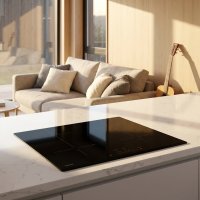
Embarking on the open road in your campervan offers unparalleled freedom, but when it comes to cooking, finding the right solution is key. For many van dwellers, the induction hob for campervan is fast becoming the go-to choice, offering a modern, efficient, and safe alternative to traditional gas stoves. If you’re pondering whether an induction cooktop is the right fit for your mobile kitchen, you’ve come to the right place. We’re diving deep into everything you need to know to harness the power of induction cooking in your rolling home.
Why Choose an Induction Hob for Your Campervan? The Benefits of Going Electric
Induction cooking uses electromagnetic fields to heat your cookware directly, transforming your pot or pan into the heat source itself. This innovative technology brings a host of advantages perfect for the unique environment of a campervan.
Enhanced Safety for Your Mobile Kitchen
One of the most compelling reasons to opt for an induction hob in your campervan is safety. Unlike gas stoves, there’s no open flame, significantly reducing the risk of fire or gas leaks within your compact living space. The cooking surface itself doesn’t get hot unless a suitable pan is detected, and it cools down remarkably fast once the pan is removed. Many models even feature automatic shut-off if no cookware is present, adding an extra layer of peace of mind, especially if you have pets or small children onboard.
Superior Efficiency and Lightning-Fast Cooking
Time is precious, even more so when you’re on an adventure. Induction hobs boast incredible energy efficiency, transferring about 85-90% of energy directly to your food, compared to just 40-55% for gas stoves. What does this mean for you? Faster cooking times! Boiling water can happen 20-40% quicker than on a gas or traditional electric stove. Plus, since less heat escapes into the surrounding air, your campervan stays cooler, a huge bonus on warm days.
Cleaner & Healthier Air Inside Your Van
Say goodbye to combustion byproducts. Gas hobs release pollutants like nitrogen dioxide (NO₂) and carbon monoxide (CO), which can degrade air quality and pose health risks in confined spaces, necessitating constant ventilation. Induction hobs produce no such fumes, leading to a cleaner, healthier interior environment. Cleaning up is also a breeze; the flat, smooth glass surface wipes clean in seconds, with no fiddly grates or burners to scrub.
Space-Saving Design and Modern Aesthetics
Campervan kitchens thrive on smart design and efficient use of space. Induction hobs are typically sleek, lightweight, and incredibly compact. Whether you choose a built-in model for a seamless look or a portable unit for ultimate flexibility (allowing you to cook inside or out), an induction cooktop integrates beautifully into any modern van conversion, often freeing up valuable storage that would otherwise be used for gas tanks.
Say Goodbye to Gas Headaches
Embracing an induction hob means breaking free from the complexities of a gas system. No more worrying about installing gas lines, finding storage for bulky propane tanks, or hunting for compatible gas refills in different countries. It simplifies your build, reduces potential leak points, and liberates you from a fossil fuel dependency, especially if you’re leaning towards an “all-electric” van setup.
The Power Challenge: What Your Campervan Needs to Run an Induction Hob
|
Our Picks for the Best Induction Hob in 2026
As an Amazon Associate I earn from qualifying purchases.
|
||
| Num | Product | Action |
|---|---|---|
| 1 | Portable Induction Cooktop 20 Temperature & Power Levels,1800W Single Burner Electric Cooktop with 6.8 inch Heating Coil,Low Noise Hot Plate with Timer |

|
| 2 | Mueller RapidTherm Portable Induction Cooktop Hot Plate Countertop Burner 1800W, 8 Temp Levels, Timer, Auto-Shut-Off, Touch Panel, LED Display, Auto Pot Detection, Child Safety Lock, 4 Preset Programs |
|
| 3 | LỖI |
|
| 4 | AMZCHEF Portable Induction Cooktop 20 Temperature & Power Levels, 1800W Induction Stove Burner with 6.8\" Heating Coil, Low Noise Hot Plate Single Electric Cooktops Countertop Stove with Timer |
|
| 5 | Nuwave Flex Precision Induction Cooktop, 10.25” Shatter-Proof Ceramic Glass, 6.5” Heating Coil, 45 Temps from 100°F to 500°F, 3 Wattage Settings 600, 900 & 1300 Watts, Black |
|
| 6 | Duxtop Professional Portable Induction Cooktop, Commercial Range Countertop Burner, 1800 Watts Induction Burner with Sensor Touch and LCD Screen, P961LS/BT-C35-D, Silver/Black |
|
| 7 | Duxtop Portable Induction Cooktop Burner, Induction Hot Plate with LCD Sensor Touch 1800 Watts, Silver 9600LS/BT-200DZ |
|
| 8 | AMZCHEF Portable-Induction-Cooktop: 74 Temperature Levels Induction Burner with Digital Probe, 1800W Countertop Burner with 20 Power Levels, 6.5\" Heating Coil, Low Noise Electric Cooktops with Timer |
|
| 9 | ChangBERT Induction Cooktop, Commercial Grade Portable Cooker, Large 8” Heating Coil, Premium Stainless Steel Countertop Burner with NSF Certified, 10 Hours Timer Powerful 1800W Professional Hot Plate |
|
| 10 | Duxtop 1800W Portable Induction Cooktop Countertop Burner, Gold 8100MC/BT-180G3 |
|
While the benefits are compelling, the most significant consideration for an induction hob for campervan use is its power requirement. Induction hobs are power-hungry, and successfully running one off-grid demands a robust electrical system.
Understanding Wattage: A Campervan’s Culinary Appetite
Most single portable induction units consume between 1500W and 2000W at their maximum setting. Double induction hobs can draw even more, often between 2000W and 2800W. This high wattage means careful planning is essential to ensure your electrical system can handle the load.
The Essential Electrical System Upgrade
To truly enjoy the convenience of an induction hob, especially when off-grid, you’ll need to invest in a capable electrical system.
- High-Capacity Lithium Battery Bank: This is non-negotiable for off-grid induction cooking. We’re talking substantial capacity – ideally 300Ah to 500Ah (Amp-hours) of LiFePO4 (Lithium Iron Phosphate) batteries. Unlike traditional lead-acid batteries, lithium batteries can handle deep discharges and deliver high current without significant voltage drop, ensuring your hob performs consistently. A 200Ah lithium bank might get you by for light use, but it rapidly depletes under sustained induction cooking.
- Robust Pure Sine Wave Inverter: Your campervan typically runs on a 12V DC system, while induction hobs require 230V or 120V AC. A high-quality pure sine wave inverter is crucial to convert your battery’s DC power into the clean AC power your hob needs. While a 2000W continuous inverter might seem sufficient for a single hob, a 3000W inverter is strongly recommended. This provides a crucial buffer for surge demands when the hob first fires up or when you’re using other appliances simultaneously, preventing frustrating trips. Remember, a 3000W inverter can draw a tremendous current—up to 350 amps from your 12V system—so all connections must be secure to prevent electrical fire risks.
- Multi-Source Charging: To replenish your powerful battery bank, you’ll need multiple charging methods. Solar panels are excellent for sustainable top-ups, but consider them as part of a larger system. A high-output DC-DC charger, which charges your leisure battery from your vehicle’s alternator while driving, is vital. And, of course, shore power hook-ups at campsites offer unlimited electricity for sustained cooking. Relying solely on solar might leave you short on power, especially on cloudy days or in winter.
Cookware Compatibility: A Must-Have
Induction hobs only work with magnetic cookware. This means your pots and pans must have a ferrous (iron-based) bottom. Cast iron and magnetic stainless steel are perfect. Aluminum and copper cookware will not work unless they have a specially designed induction-compatible base. It’s a simple check: if a magnet sticks to the bottom of your pan, it’s induction-ready!
Induction vs. Gas: Making the Right Choice for Your Van Life
The decision between an induction hob and a gas stove for your campervan often boils down to lifestyle and priorities.
| Feature | Induction Hob for Campervan | Gas Stove for Campervan |
|---|---|---|
| Safety | No open flame, cool-to-touch surface (after pan removed) | Open flame, potential for gas leaks, carbon monoxide risk |
| Efficiency | High (85-90%), direct heat transfer, cooler interior | Lower (40-55%), significant heat loss to ambient air |
| Cooking Speed | Faster (especially boiling water) | Slower |
| Cleanliness | Flat, easy-to-wipe glass surface | Fiddly grates, burners, harder to clean |
| Power Source | Electricity (requires robust battery/inverter/charging) | Propane/LPG (requires gas tank storage, refills) |
| Environmental | Can be “all-electric” and renewable-powered | Emits greenhouse gases and pollutants |
| Initial Cost | Higher (due to electrical system upgrades) | Lower (simpler setup) |
| Off-Grid Viability | Excellent with proper system, requires management | Very good, long autonomy with one bottle |
| Cookware | Magnetic (ferrous) only | Most types compatible |
For those prioritizing safety, cleanliness, efficiency, and a desire to move towards an “all-electric” setup, an induction hob is a fantastic investment. If budget and long-term off-grid autonomy without extensive electrical system upgrades are your main concerns, gas might still hold an appeal.
Tips for Maximizing Your Induction Hob’s Performance in a Campervan
To get the most out of your induction hob for campervan, consider these expert tips:
- Smart Power Management: Be mindful of your power usage. Cook at lower settings when possible, use lids on pots to retain heat, and consider cooking your most power-intensive meals when your batteries are fully charged or you’re hooked up to shore power. Monitor your battery bank and inverter closely.
- Choosing the Right Hob: Look for models with variable power settings, allowing you to precisely control the wattage. Some hobs run at full power intermittently to achieve lower settings, which isn’t ideal for inverter health. A hob that truly runs continuously at a chosen lower wattage is preferable. Consider a portable single burner for ultimate flexibility.
- Essential Accessories: Invest in a good quality induction-compatible kettle for boiling water rapidly and efficiently. A robust, well-insulated cooler or fridge also helps reduce other electrical loads.
“The shift to induction cooking in campervans isn’t just a trend; it’s a testament to advancements in mobile power solutions,” explains Dr. Elara Vance, a renowned expert in mobile energy systems and sustainable living. “While the initial electrical infrastructure might seem daunting, the long-term benefits in terms of safety, efficiency, and convenience make it a truly transformative upgrade for any van lifer aiming for an all-electric experience.”
Frequently Asked Questions About Induction Hobs for Campervans
Are 12V induction hobs available for campervans?
Unfortunately, true 12V induction hobs are not currently available on the market. All induction cooktops require higher voltage AC power (typically 230V or 120V), which means you’ll need a powerful inverter to convert your campervan’s 12V DC battery power.
How much battery capacity do I really need for an induction hob?
For serious off-grid use, a high-capacity lithium battery bank of 300Ah to 500Ah is ideally recommended. While you might manage with less for occasional use, a robust system ensures you can cook without constantly worrying about depleting your power.
Is induction cooking safe in a small campervan space?
Yes, induction cooking is exceptionally safe for small campervan spaces. There’s no open flame, the surface cools quickly, and many models have automatic pan detection and shut-off features, reducing the risk of accidental burns or fires compared to gas stoves.
Can I use my regular pots and pans on an induction hob?
Only pots and pans with a magnetic (ferrous) base will work on an induction hob. To check, simply hold a magnet to the bottom of your cookware; if it sticks, you’re good to go!
What’s the main difference between gas and induction for campervans?
The main difference lies in the power source and method of heat generation. Gas uses propane/LPG and an open flame, requiring fuel storage and ventilation. Induction uses electricity and electromagnetic fields, heating cookware directly without an open flame, but demands a significant electrical system.
Conclusion
Embracing an induction hob for campervan life is a significant step towards a safer, more efficient, and cleaner mobile kitchen. While it requires a thoughtful investment in a robust electrical system – particularly a high-capacity lithium battery bank and a powerful pure sine wave inverter – the benefits are undeniable. From rapid cooking and easy cleanup to enhanced safety and freedom from gas infrastructure, induction cooking truly elevates the campervan culinary experience. We encourage you to weigh these advantages against the power requirements and embark on your next adventure with the confidence of a perfectly cooked meal, powered by the future of mobile cooking.
Cooking gear we tested in our own kitchens
Free PDF — preheat times measured on 10 popular air fryers.