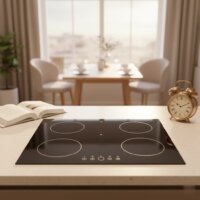
An EF induction hob revolutionizes kitchen cooking by offering a blend of modern innovation, unparalleled safety, and remarkable efficiency, making daily cooking effortless, precise, and enjoyable. These hobs utilize electromagnetic induction to directly heat cookware, keeping the cooking surface relatively cool and reducing burn risks. With features like Sensor Sliding Touch Control, Pan Recognition, and a Boost Function, EF induction hobs provide precise temperature management and rapid heating, making them a smart upgrade for modern kitchens.

What Makes an EF Induction Hob Stand Out? Understanding the Core Technology
At its heart, an EF induction hob leverages the fascinating science of electromagnetic induction to transform how you cook. Unlike traditional electric or gas stoves that use direct heat, induction hobs generate a magnetic field that directly heats the cookware itself. This means the cooking surface stays relatively cool to the touch, drastically reducing the risk of accidental burns—a massive win for household safety, especially with curious little ones around.
This direct heating method isn’t just safer; it’s incredibly efficient. Imagine boiling water in minutes or getting an instant temperature adjustment, much like a gas flame but with far greater precision. This rapid response and minimal heat loss to the surrounding air make an EF induction hob an energy-efficient champion in your kitchen, saving both time and utility bills. Plus, with its sleek glass surface, cleaning up spills is usually just a quick wipe away, as food rarely bakes onto the cool surface.
Dive into EF Induction Hob Features: Smart Design for Effortless Cooking
EF induction hobs come packed with thoughtful features designed to enhance your cooking experience, making it intuitive and precise.
Sensor Sliding Touch Control: Precision at Your Fingertips
Gone are the days of fiddly knobs. EF induction hobs boast Sensor Sliding Touch Control, allowing you to effortlessly adjust cooking levels and timers with a simple slide of your finger. It’s like a digital maestro for your meals, offering nine distinct cooking levels to give you ultimate command, from a gentle simmer to a powerful sear. You can also directly select your desired heating level with a quick touch, making operation wonderfully straightforward.
Pan Recognition Sensor: Smart, Safe, and Efficient Operation
Ever wonder if you’re using the right pan? Your EF induction hob takes the guesswork out of it. The integrated Pan Recognition Sensor automatically detects suitable magnetic cookware. If an incorrect or no pan is present, a visible symbol blinks to alert you, preventing wasted energy and ensuring the hob only operates when it’s meant to. This intelligent feature underscores both safety and efficiency.
99 Mins Time Control: Perfect Timing for Every Dish
|
Our Picks for the Best Induction Hob in 2026
As an Amazon Associate I earn from qualifying purchases.
|
||
| Num | Product | Action |
|---|---|---|
| 1 | LỖI |

|
| 2 | AMZCHEF Portable Induction Cooktop 20 Temperature & Power Levels, 1800W Induction Stove Burner with 6.8\" Heating Coil, Low Noise Hot Plate Single Electric Cooktops Countertop Stove with Timer |
|
| 3 | Mueller RapidTherm Portable Induction Cooktop Hot Plate Countertop Burner 1800W, 8 Temp Levels, Timer, Auto-Shut-Off, Touch Panel, LED Display, Auto Pot Detection, Child Safety Lock, 4 Preset Programs |
|
| 4 | Nuwave Flex Precision Induction Cooktop, 10.25” Shatter-Proof Ceramic Glass, 6.5” Heating Coil, 45 Temps from 100°F to 500°F, 3 Wattage Settings 600, 900 & 1300 Watts, Black |
|
| 5 | Portable Induction Cooktop 20 Temperature & Power Levels,1800W Single Burner Electric Cooktop with 6.8 inch Heating Coil,Low Noise Hot Plate with Timer |
|
| 6 | ChangBERT Induction Cooktop, Commercial Grade Portable Cooker, Large 8” Heating Coil, Premium Stainless Steel Countertop Burner with NSF Certified, 10 Hours Timer Powerful 1800W Professional Hot Plate |
|
| 7 | Duxtop Professional Portable Induction Cooktop, Commercial Range Countertop Burner, 1800 Watts Induction Burner with Sensor Touch and LCD Screen, P961LS/BT-C35-D, Silver/Black |
|
| 8 | Duxtop 1800W Portable Induction Cooktop Countertop Burner, Gold 8100MC/BT-180G3 |
|
| 9 | Duxtop Portable Induction Cooktop Burner, Induction Hot Plate with LCD Sensor Touch 1800 Watts, Silver 9600LS/BT-200DZ |
|
| 10 | AMZCHEF Portable-Induction-Cooktop: 74 Temperature Levels Induction Burner with Digital Probe, 1800W Countertop Burner with 20 Power Levels, 6.5\" Heating Coil, Low Noise Electric Cooktops with Timer |
|
Whether you’re simmering a slow-cooked stew or just need a quick alert for your pasta, the 99 Mins Time Control is your reliable kitchen assistant. This versatile timer can function as a minute minder, signaling when your cooking alert is due, or as an automatic switch-off timer, ensuring your dishes are never overcooked and freeing you to multitask without worry.
Boost Function: Power When You Need It Most
Need to get to a rolling boil in a flash or sear a steak to perfection? The Boost Function is your secret weapon. This feature allows a cooking zone to operate at its maximum power for a specific duration, typically up to 5 minutes, significantly accelerating the heating process. It’s perfect for those moments when speed is of the essence.
Safety First: Child Lock & Overflow Protection
Safety is paramount in any kitchen, and EF understands this well. The Child Lock function secures the touch-control keys, preventing accidental activation by curious little hands. The Overflow Safety Device automatically switches off the hob if liquids boil over and reach the control panel, protecting your appliance and ensuring a safe cooking environment.
Automatic Safety Switch Off: Preventing Mishaps
For added peace of mind, EF induction hobs include an Automatic Safety Switch Off feature. If a cooking zone is left on for an extended period without further operation, it will automatically power down, preventing potential hazards and conserving energy.
Flexible Cooking Zones (on select models): Adaptability for Diverse Cookware
For those who love to experiment with various pot and pan sizes, including large roasting pans or rectangular griddles, select EF induction hob models offer Flexible Cooking Zones. These allow you to combine two cooking zones to create a larger, unified heating area, providing unparalleled adaptability for your culinary adventures.
Premium Build: German SCHOTT CERAN Glass: Durability Meets Elegance
Many EF induction hob models feature premium German SCHOTT CERAN Glass. This high-quality ceramic glass is not only incredibly durable and resistant to scratches and impacts but also contributes to the hob’s sleek, modern aesthetic. It’s easy to clean and maintains its elegant appearance, becoming a focal point in any contemporary kitchen.
Installation and Power Considerations for Your EF Induction Hob
Bringing an EF induction hob into your home requires a bit of foresight regarding installation.
Electrical Requirements
Induction hobs are powerful appliances, and EF models typically require a dedicated electrical supply, often 15 Amps at 220-240V/50Hz. For safety and compliance, any fixed wiring and alterations to your domestic electrical system must only be performed by a qualified electrician. This ensures your hob operates safely and efficiently for years to come.
Cut-Out Dimensions
When replacing an old hob or designing a new kitchen, always check the specific built-in dimensions of your chosen EF induction hob model. Ensuring the correct cut-out size is crucial for a seamless and secure installation. EF provides detailed product dimensions to help you plan accordingly.
Power Management Feature
Some EF induction hobs include a Power Management feature, which allows you to limit the maximum total power consumption of the hob (e.g., to 3.4kW). This is particularly useful in homes where electrical supply might be a concern, helping to prevent overloading circuits while still providing excellent cooking performance.
Maximizing Performance and Longevity: Tips for Your EF Induction Hob
To get the most out of your EF induction hob and ensure it serves you well for many years, a few simple practices go a long way.
Choosing the Right Cookware
induction technology relies on magnetism. To test if your existing pots and pans are suitable, simply hold a fridge magnet to the bottom of the cookware. If it sticks firmly, you’re good to go! For optimal performance, choose flat-bottomed, magnetic cookware, as this ensures the best contact and most efficient heat transfer.
Cleaning and Maintenance
One of the greatest joys of an induction hob is how easy it is to clean. Since the surface doesn’t get scorching hot, spills don’t typically burn on. For everyday cleaning, a damp cloth with a mild detergent is usually sufficient. For tougher marks, specialized ceramic hob cleaners can work wonders. Always ensure the hob is cool before cleaning.
Troubleshooting Common Issues
While EF induction hobs are highly reliable, occasional issues can arise. If your hob isn’t heating, first check if your cookware is magnetic and correctly positioned. If an error code appears, consult your hob’s user manual – EF provides comprehensive guides that often offer simple solutions for common problems. to always ensure the power supply is stable.
Is an EF Induction Hob Right for You? Weighing the Pros and Cons
Considering an EF induction hob is a decision that brings many benefits, though it’s wise to consider all angles.
Pros:
- Speed and Efficiency: Heats food incredibly fast, saving time and energy.
- Enhanced Safety: The hob surface remains cool, significantly reducing burn risks. Features like Child Lock and Overflow Safety further boost peace of mind.
- Easy to Clean: Spills don’t bake on, making cleanup a breeze.
- Precise Control: Instantaneous temperature adjustments and nine cooking levels offer unmatched culinary precision.
- Modern Aesthetic: A sleek glass surface adds a touch of sophistication to any kitchen.
- Smart Features: Pan Recognition, Boost Function, and Time Control streamline your cooking process.
Cons/Considerations:
- Cookware Compatibility: Requires specific magnetic-bottomed pots and pans. This might mean an initial investment if your current collection isn’t induction-ready.
- Initial Cost: Generally, induction hobs can be more expensive upfront than gas or traditional electric models.
- Potential Noise: Some users report a faint humming or clicking sound during operation, which is normal for induction technology.
- Power Outages: Like any electric appliance, it won’t work during a power cut.
“From my 15 years in kitchen appliance technology, I’ve seen EF Induction Hobs consistently deliver on their promise of combining innovative features with robust performance, making them a smart investment for modern homes,” says John Chen, Lead Product Specialist at Gooau.com. “Their commitment to safety and user-friendly design truly sets them apart.”
Frequently Asked Questions (FAQ)
Q: Do EF induction hobs require special cookware?
A: Yes, EF induction hobs, like all induction cooktops, require cookware with a magnetic base. You can test your existing pans by seeing if a magnet sticks firmly to the bottom.
Q: How do I clean my EF induction hob?
A: Cleaning is simple! Since the surface doesn’t get hot, spills typically don’t burn on. For daily cleaning, use a damp cloth with mild detergent. For tougher marks, a specialized ceramic hob cleaner can be effective. Always ensure the hob is cool before cleaning.
Q: What is the Boost Function for on an EF induction hob?
A: The Boost Function temporarily increases the power of a cooking zone to its maximum level for a short period (usually up to 5 minutes). This is ideal for rapidly boiling water or quickly heating food.
Q: Are EF induction hobs energy efficient?
A: Absolutely! Induction technology heats the cookware directly, minimizing heat loss to the surrounding air, making EF induction hobs significantly more energy-efficient than traditional gas or electric hobs.
Q: Can I use cast iron on an EF induction hob?
A: Yes, cast iron cookware is generally suitable for EF induction hobs because it is magnetic. Ensure the bottom is flat for optimal contact and performance.
Q: What should I do if my EF induction hob displays an error code?
A: If your EF induction hob displays an error code, first check your user manual for troubleshooting steps specific to that code. Common solutions might involve checking cookware placement or power supply. If the issue persists, contact EF’s customer support or a qualified technician.
Embracing the Future of Cooking with EF
The EF induction hob stands as a shows how far kitchen technology has come, offering a sophisticated yet accessible way to cook. Its blend of speed, safety, precision, and ease of maintenance makes it an outstanding choice for any modern home. Whether you’re a seasoned chef or a busy home cook, embracing an EF induction hob means investing in a smoother, smarter, and more enjoyable culinary journey. Explore the possibilities and discover how this innovative appliance can improve your kitchen and your cooking for the better.
Frequently Asked Questions
Do EF induction hobs require special magnetic cookware?
Yes, EF induction hobs, like all induction cooktops, require cookware with a magnetic base. You can easily test your existing pans by seeing if a magnet sticks firmly to the bottom. For optimal performance, flat-bottomed magnetic cookware is recommended.
How do I clean the surface of my EF induction hob?
Cleaning an EF induction hob is straightforward because the surface doesn't get scorching hot, preventing spills from burning on. For daily cleaning, a damp cloth with mild detergent is usually sufficient. For tougher marks, specialized ceramic hob cleaners can be effective, always ensuring the hob is cool before cleaning.
What is the purpose of the Boost Function on an EF induction hob?
The Boost Function on an EF induction hob temporarily increases the power of a cooking zone to its maximum level for a short period, typically up to 5 minutes. This feature is ideal for rapidly boiling water, quickly heating food, or searing ingredients to perfection when speed is essential.
Are EF induction hobs considered energy efficient for home use?
Absolutely, EF induction hobs are significantly more energy-efficient than traditional gas or electric hobs. This is because induction technology heats the cookware directly through electromagnetic fields, minimizing heat loss to the surrounding air and reducing overall energy consumption.
Can cast iron pots and pans be used on an EF induction hob?
Yes, cast iron cookware is generally suitable for EF induction hobs because it is magnetic, which is a requirement for induction technology. For optimal contact and efficient heat transfer, ensure the bottom of your cast iron cookware is flat.
What should I do if my EF induction hob displays an error code?
If your EF induction hob displays an error code, first consult your user manual for specific troubleshooting steps related to that code. Common solutions often involve checking cookware placement or ensuring a stable power supply. If the issue persists, contact EF's customer support or a qualified technician for assistance.
Cooking gear we tested in our own kitchens
Free PDF — preheat times measured on 10 popular air fryers.
The EF induction hob has been a fantastic addition to my kitchen. The Pan Recognition feature is super handy, and it really does heat up cookware directly and efficiently. My only minor complaint is that I had to buy a few new pots and pans, as some of my old ones weren’t induction-compatible. But overall, the cooking experience is much better and more consistent than my old electric coil stove.
This EF induction hob is a game-changer for my small apartment kitchen. The efficiency is incredible; I’ve noticed a difference in my electricity bill. I particularly like how clean it is to cook with, as spills don’t bake onto the surface. The electromagnetic induction technology really does make cooking effortless and enjoyable.
I’ve been using my EF induction hob for a few weeks now, and while I appreciate the rapid heating and the safety aspects, I’m still getting used to it. The precise temperature management is great for delicate sauces, but sometimes I find the controls a bit too sensitive. It’s a good hob, but there’s a slight learning curve if you’re used to traditional cooking methods.
I finally upgraded to an EF induction hob after years of using a gas stove, and the difference is night and day. The Sensor Sliding Touch Control is incredibly intuitive, making it so easy to adjust temperatures precisely. I love how quickly water boils with the Boost Function; it’s a real time-saver for weeknight dinners. Plus, knowing the surface stays relatively cool gives me peace of mind with my kids around.