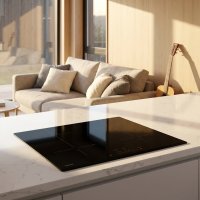
Stepping into a modern kitchen, what’s one of the first things that catches your eye? Often, it’s the sleek, seamless look of an integrated cooking surface, effortlessly blending with the countertop. This isn’t just about aesthetics; it’s the quiet revolution of the inbuilt induction hob, a game-changer for home cooks and kitchen enthusiasts alike. At Gooau, with over 15 years immersed in induction technology, we’ve seen these remarkable appliances transform kitchens, offering a blend of efficiency, safety, and sophisticated design that truly stands out. If you’re pondering an upgrade or just curious about this cutting-edge cooking solution, you’ve come to the right place.
What Exactly is an Inbuilt Induction Hob?
Think of an inbuilt induction hob as the discreet powerhouse of your kitchen. Unlike traditional freestanding cookers or even surface-mounted electric hobs, an inbuilt induction hob is designed to be flush with your countertop, creating a continuous, elegant workspace. This isn’t just a design choice; it’s fundamentally about how it cooks. Induction technology utilizes electromagnetic fields to directly heat your cookware, rather than heating a coil or flame first. This means the heat is generated in the pot itself, not on the hob’s surface. The result? A remarkably fast, efficient, and responsive cooking experience, all hidden beneath a smooth, easy-to-clean glass-ceramic surface.
The Unbeatable Advantages of Going Inbuilt
Choosing an inbuilt induction hob isn’t just about cooking; it’s about upgrading your entire kitchen experience. From their stunning looks to their ingenious functionality, these hobs bring a wealth of benefits to your home.
Sleek Aesthetics and Space-Saving Design
One of the most immediate appeals of an inbuilt induction hob is its seamless integration. Embedded directly into your kitchen countertop, it offers a remarkably sleek and minimalist appearance. This flush design not only looks incredibly modern but also helps to maximize precious kitchen space, especially in smaller layouts. It eliminates the bulk of traditional stoves, creating clean lines and an unobstructed work area that’s both beautiful and practical. This aesthetic value is why inbuilt induction hobs are often the first choice for contemporary open kitchens.
Unparalleled Efficiency and Speed
When it comes to speed, induction cooking is in a league of its own. These hobs can boast an energy efficiency of up to 90%, converting most of the energy used directly into heat for your food. This efficiency translates into remarkably fast cooking times—boiling a liter of water can take as little as 3-4 minutes, significantly faster than gas or traditional electric hobs. This direct heating method also means less heat dissipates into your kitchen, making for a cooler cooking environment and potentially lower energy bills.
Enhanced Safety Features
|
Our Picks for the Best Induction Hob in 2026
As an Amazon Associate I earn from qualifying purchases.
|
||
| Num | Product | Action |
|---|---|---|
| 1 | AMZCHEF Portable-Induction-Cooktop: 74 Temperature Levels Induction Burner with Digital Probe, 1800W Countertop Burner with 20 Power Levels, 6.5\" Heating Coil, Low Noise Electric Cooktops with Timer |

|
| 2 | LỖI |
|
| 3 | Duxtop 1800W Portable Induction Cooktop Countertop Burner, Gold 8100MC/BT-180G3 |
|
| 4 | Mueller RapidTherm Portable Induction Cooktop Hot Plate Countertop Burner 1800W, 8 Temp Levels, Timer, Auto-Shut-Off, Touch Panel, LED Display, Auto Pot Detection, Child Safety Lock, 4 Preset Programs |
|
| 5 | Nuwave Flex Precision Induction Cooktop, 10.25” Shatter-Proof Ceramic Glass, 6.5” Heating Coil, 45 Temps from 100°F to 500°F, 3 Wattage Settings 600, 900 & 1300 Watts, Black |
|
| 6 | Portable Induction Cooktop 20 Temperature & Power Levels,1800W Single Burner Electric Cooktop with 6.8 inch Heating Coil,Low Noise Hot Plate with Timer |
|
| 7 | Duxtop Professional Portable Induction Cooktop, Commercial Range Countertop Burner, 1800 Watts Induction Burner with Sensor Touch and LCD Screen, P961LS/BT-C35-D, Silver/Black |
|
| 8 | ChangBERT Induction Cooktop, Commercial Grade Portable Cooker, Large 8” Heating Coil, Premium Stainless Steel Countertop Burner with NSF Certified, 10 Hours Timer Powerful 1800W Professional Hot Plate |
|
| 9 | AMZCHEF Portable Induction Cooktop 20 Temperature & Power Levels, 1800W Induction Stove Burner with 6.8\" Heating Coil, Low Noise Hot Plate Single Electric Cooktops Countertop Stove with Timer |
|
| 10 | Duxtop Portable Induction Cooktop Burner, Induction Hot Plate with LCD Sensor Touch 1800 Watts, Silver 9600LS/BT-200DZ |
|
Safety is paramount in any kitchen, and inbuilt induction hobs shine in this area. Since they don’t use open flames or glowing elements, the risk of accidental burns is significantly reduced. The hob surface itself only heats up indirectly from the pan, and cools down quickly once the cookware is removed. Many models also include an integrated pan detection system, meaning the hob won’t activate unless a compatible pan is present. Add to that features like child safety locks, overheat auto shut-off, and residual heat indicators (often showing an ‘H’ for “hot”), and you have a cooking appliance designed with peace of mind in mind.
Effortless Cleaning
Say goodbye to scrubbing baked-on spills! The smooth, flat glass-ceramic surface of an inbuilt induction hob makes cleaning a breeze. Since the hob itself doesn’t get blazing hot outside the cooking zones, food spills don’t burn onto the surface. A simple wipe with a damp cloth and mild detergent after each use is usually all it takes to keep it sparkling. This ease of maintenance not only saves time but also keeps your kitchen looking pristine.
Precision Cooking Control
Ever wish you could adjust your heat with the responsiveness of a gas flame but with even greater accuracy? Induction delivers. The electromagnetic field allows for instantaneous and precise temperature adjustments. Whether you’re simmering a delicate sauce or bringing water to a rapid boil, the control is immediate and exact, giving you mastery over your culinary creations. This responsiveness helps prevent overcooking and allows for truly controlled cooking.
Navigating the Installation Journey for Your Inbuilt Induction Hob
Bringing an inbuilt induction hob into your kitchen is a fantastic decision, but installation requires careful planning. While the idea of a seamless hob is appealing, correctly embedding it into your countertop and connecting it electrically is crucial for both functionality and safety.
Pre-Installation Checks: Measure Twice, Cut Once
Before anything else, you’ll need precise measurements. Most inbuilt induction hobs have standard cutout dimensions, commonly around 56 cm wide and 49 cm deep, but these can vary by model. Always refer to your specific hob’s manual for exact requirements. You’ll need to ensure your countertop has the correct opening size. Crucially, adequate ventilation underneath the hob is non-negotiable. The hob’s cooling fan needs space to operate effectively, preventing overheating and potential malfunctions. Blocked fans can lead to issues like frequent shutdowns or unusual noises.
DIY vs. Professional Installation: When to Call the Experts
While some minor tasks might be within a confident DIYer’s reach, connecting an inbuilt induction hob to your mains electricity should almost always be handled by a qualified electrician. These appliances typically require a dedicated circuit with a specific amperage (often a 40-amp MCB with a 6-amp cable, though some smaller models may offer a simpler “plug & go” 13A connection). Ensuring the voltage level matches your home’s supply is vital. An electrician will ensure safe and compliant wiring, often connecting the hob directly to a connection box rather than a standard single-phase plug. For larger openings, mounting brackets might be necessary to secure the hob properly, especially for future maintenance.
Choosing Your Perfect Inbuilt Induction Hob: A Buyer’s Checklist
With so many excellent inbuilt induction hob options available, selecting the right one can feel daunting. Here’s what to consider to ensure you pick a model that perfectly fits your lifestyle and culinary ambitions.
Power and Cooking Zones
Consider how you cook. Do you often prepare multiple dishes simultaneously, or do you need space for larger pots? Inbuilt induction hobs typically offer between one and five cooking zones. Many modern models feature “bridge” or “flex” zones, allowing you to combine two smaller zones into one large cooking area, perfect for griddle pans or oversized cookware. Look for boost functions, which provide an instant surge of heat for rapid boiling, and a wide range of power levels (some offer 9-17 settings) for ultimate cooking versatility. An overall power rating of around 2800W is generally sufficient for home use, but higher wattage means faster heating.
Control and User Interface
Most inbuilt induction hobs feature sleek, touch-sensitive controls that sit flush with the surface. Evaluate the responsiveness and intuitiveness of these controls. Do they respond quickly to your touch? Many models include independent timers for each zone, allowing you to manage multiple dishes with precision. A clear display for settings and remaining cooking time is also a significant plus.
Essential Safety Features
Revisit those critical safety elements. Ensure your chosen model includes a child safety lock to prevent accidental activation, especially if you have little ones around. Overheat auto shut-off, empty pot detection, and anti-spill functions are also valuable safeguards. Look for residual heat indicators that clearly show when a cooking zone is still hot to the touch, preventing accidental burns. Some advanced models may even feature touch-type double switch protection, requiring two distinct presses to activate for added security.
Size and Fit
While standard cutout dimensions are common, measure your existing opening or planned space carefully. If you’re replacing an older hob, note its exact dimensions. Some manufacturers offer extra-large models or compact “domino” hobs with fewer zones, which have specific recessed dimensions. Remember, once installed, an inbuilt hob cannot be easily moved, so getting the size right from the start is crucial.
Cookware Compatibility
This is a fundamental aspect of induction cooking. Your pots and pans must have magnetic bases. Materials like cast iron and most stainless steels are ideal. To check if your existing cookware is compatible, simply hold a fridge magnet to the bottom – if it sticks, you’re good to go! Additionally, ensure your cookware has flat bases for optimal contact and even heat distribution. Uneven or textured bases can not only hinder performance but also risk scratching your hob’s surface.
Smart Features and Connectivity
The smart home revolution has reached the kitchen! Some advanced inbuilt induction hobs offer connectivity features like “Hob2Hood,” which automatically syncs with a compatible extractor fan, adjusting its power based on your cooking intensity. Others may integrate with smart apps, offering remote control, cooking tips, and recipe inspiration. These features can add a layer of convenience and sophistication to your cooking.
Keeping Your Inbuilt Induction Hob Running Smoothly: Maintenance and Troubleshooting
Even the most advanced kitchen appliances need a little TLC. With over a decade and a half of practical experience, I can tell you that a well-maintained inbuilt induction hob will serve you faithfully for years. Knowing how to care for it and handle common hiccups can save you time, money, and frustration.
Daily Care: The Key to Longevity
The smooth glass-ceramic surface is a joy to clean. After every use, once the hob has cooled (the ‘H’ indicator has disappeared), simply wipe it down with a soft, damp cloth and a mild detergent solution. Avoid abrasive cleaners, scouring pads, or harsh chemicals, as these can scratch or damage the surface. For stubborn, burnt-on food, a specialized ceramic hob scraper can be used gently, but always ensure the hob is cool first. Regularly checking for any signs of damage, like cracks or chips, is also important; if found, discontinue use until it’s repaired or replaced.
Common Hiccups and Quick Fixes
Even the best inbuilt induction hobs can sometimes seem to have a mind of their own. Here are some common issues and what you can often do about them:
- Pans not working: This is almost always due to incompatible cookware. Remember the magnet test! Also, ensure the pan is correctly centered on the cooking zone.
- Hob not turning on: First, check if it’s plugged in and if your circuit breaker has tripped. Ensure the child safety lock isn’t activated (often indicated by a specific light or symbol). A “cold reset” – turning off the hob at the mains for 30 minutes – can sometimes resolve unresponsive controls.
- Frequent shutdowns: This can happen if the hob is overheating due to blocked ventilation underneath or if a pan is left empty for too long. Ensure proper airflow and don’t leave empty pans on high heat.
- Unresponsive touch buttons: A common culprit is moisture or food residue on the control panel. Clean the surface thoroughly with a dry or slightly damp cloth. If the child lock is on, deactivate it.
- Uneven heating: This typically points to incompatible or warped cookware. Use flat-bottomed, magnetic pans that are appropriately sized for the cooking zone.
- Unusual noises (buzzing/humming): A slight buzzing or humming sound is often normal, especially at higher power settings or with lightweight pans. However, persistent or loud noises could indicate issues with the internal fan or control board, possibly related to poor installation/ventilation.
When to Call a Pro
While basic troubleshooting can solve many issues, some problems warrant professional attention. If your hob isn’t receiving power, if error codes persist after consulting your manual, if buttons remain unresponsive after cleaning and resetting, or if you suspect a faulty circuit board, it’s time to call a qualified appliance technician. Attempting complex electrical repairs yourself can be dangerous and void your warranty.
Expert Insight: Emily Chen on Inbuilt Induction Hobs
“From my years in the industry, what truly sets inbuilt induction hobs apart is their seamless marriage of form and function,” shares Emily Chen, Lead Product Specialist at Gooau. “They don’t just cook your food; they elevate your entire kitchen aesthetic while offering an unmatched level of cooking precision and energy efficiency. It’s an investment that pays dividends in daily convenience and long-term kitchen appeal.”
Frequently Asked Questions (FAQ)
Q: Are inbuilt induction hobs worth the investment compared to other types of hobs?
A: Absolutely! While the upfront cost for an inbuilt induction hob can be higher than gas or ceramic alternatives, the benefits in terms of energy efficiency (up to 90%), faster cooking times, superior safety features, and a sleek, integrated kitchen aesthetic often make it a worthwhile long-term investment. They are highly responsive and easier to clean, saving you time and effort.
Q: Can I use any pan on an inbuilt induction hob?
A: No, inbuilt induction hobs require specific cookware with magnetic bases. Materials like cast iron and many stainless steel pans are compatible. Aluminum, copper, or glass cookware will not work unless they have a built-in magnetic base layer. A quick test with a fridge magnet can determine if your pans are suitable.
Q: How do I clean my inbuilt induction hob?
A: Cleaning an inbuilt induction hob is straightforward. Once the hob has cooled down completely, simply wipe its smooth glass-ceramic surface with a soft, damp cloth and a mild detergent. Avoid abrasive cleaners or harsh chemicals, as these can scratch the surface. For stubborn spots, a specialized ceramic hob scraper can be used carefully.
Q: What kind of electrical supply does an inbuilt induction hob need?
A: Inbuilt induction hobs typically require a dedicated electrical circuit with a specific amperage, often necessitating professional installation by a qualified electrician. While some smaller models might come with a 13A plug for easier setup, it’s crucial to verify your hob’s specific power requirements and ensure your home’s electrical system can support it.
Q: What are the most common issues with inbuilt induction hobs?
A: Common issues include pans not working (due to incompatible cookware), the hob not turning on (check power, circuit breaker, or child lock), unresponsive touch controls (often due to residue on the surface or active child lock), and occasional buzzing noises (which can be normal with certain pans or power settings). Most minor issues can be resolved with simple troubleshooting, but electrical faults usually require a technician.
Conclusion
The inbuilt induction hob represents the pinnacle of modern kitchen technology, seamlessly blending powerful performance with sophisticated design. From the lightning-fast boil to the effortless clean-up, and the peace of mind offered by its advanced safety features, it truly transforms the way you cook and interact with your kitchen. At Gooau, we believe in empowering you with the knowledge to make informed choices for your home. We encourage you to explore the world of inbuilt induction hobs further – it might just be the upgrade your kitchen, and your cooking, has been waiting for.
Cooking gear we tested in our own kitchens
Free PDF — preheat times measured on 10 popular air fryers.