A domino induction hob is a compact, modular cooking appliance, typically measuring around 30 centimeters in width, designed to provide powerful and precise induction cooking in a minimal footprint. These hobs are ideal for optimizing countertop space in modern kitchens, offering two cooking zones and the flexibility to be paired with other specialized units like gas burners or Teppanyaki plates. This design makes them a versatile choice for small kitchens, secondary cooking stations, or customized culinary setups.
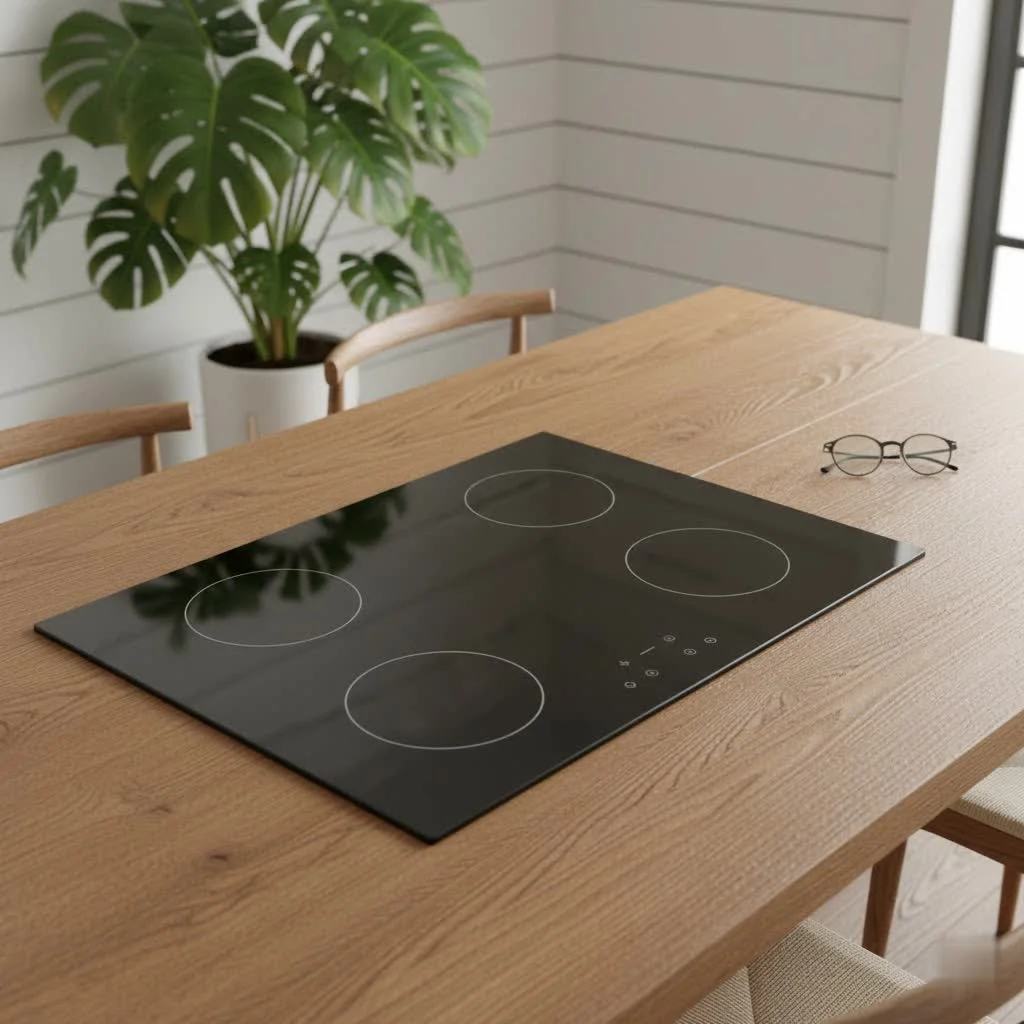 induction hob integrated into a modern kitchen countertop” style=”margin: 20px auto;width: 800px;max-width: 100%;height: auto” />
What Exactly is a Domino Induction Hob?
A domino induction hob is a compact, modular cooking appliance, typically measuring around 30 centimeters in width – roughly half the size of a standard hob. Its name, much like the game pieces, refers to its distinct oblong shape, often featuring two cooking zones arranged either front-to-back or side-by-side. Unlike a full-sized induction hob that might offer four or more cooking zones, the domino induction hob focuses on providing powerful, precise induction cooking in a minimal footprint. This design makes it an ideal solution for optimizing countertop real estate without sacrificing advanced cooking capabilities.
The beauty of these compact induction hobs lies in their modularity. You’re not just buying a hob; you’re investing in a customizable cooking system. You can easily pair a domino induction hob with other specialized domino units, such as a gas burner, a ceramic hob, a Teppanyaki plate, or even a wok burner, allowing you to curate a bespoke cooking surface perfectly tailored to your unique culinary passions. This incredible flexibility means your kitchen can evolve with your cooking needs, rather than being limited by a one-size-fits-all appliance.
The Allure of Compact Cooking: Advantages of a Domino Induction Hob
Choosing a domino induction hob brings a wealth of benefits to any kitchen, marrying modern technology with practical design.
Space-Saving Champion
For kitchens where every inch counts, a domino induction hob is a true major upgrade. Its slim profile and compact size make it ideal for smaller kitchens, urban penthouses, mobile homes, or even as an additional cooking zone in a larger kitchen for entertaining. Imagine having ample counter space for food preparation, even with a powerful cooking appliance integrated. When not in use, the flat, sleek surface of the induction hob can often serve as an extension of your countertop, a feature particularly valued in tight spaces.
Unrivaled Cooking Efficiency and Precision
As with all induction technology, the domino induction hob offers exceptional performance. It heats your cookware directly through an electromagnetic field, meaning heat is transferred with remarkable efficiency and speed, often boiling water faster than traditional gas or electric hobs. This direct heating also provides instant and precise temperature control, akin to gas, but with the added benefit of digital accuracy. Whether you’re simmering delicate sauces or searing steaks at high heat, the control offered by a domino induction hob is unparalleled, leading to better cooking results and reduced energy consumption.
Design Flexibility and Customization
|
Our Picks for the Best Induction Hob in 2026
As an Amazon Associate I earn from qualifying purchases.
|
||
| Num | Product | Action |
|---|---|---|
| 1 | Portable Induction Cooktop 20 Temperature & Power Levels,1800W Single Burner Electric Cooktop with 6.8 inch Heating Coil,Low Noise Hot Plate with Timer |

|
| 2 | AMZCHEF Portable-Induction-Cooktop: 74 Temperature Levels Induction Burner with Digital Probe, 1800W Countertop Burner with 20 Power Levels, 6.5\" Heating Coil, Low Noise Electric Cooktops with Timer |
|
| 3 | ChangBERT Induction Cooktop, Commercial Grade Portable Cooker, Large 8” Heating Coil, Premium Stainless Steel Countertop Burner with NSF Certified, 10 Hours Timer Powerful 1800W Professional Hot Plate |
|
| 4 | Duxtop 1800W Portable Induction Cooktop Countertop Burner, Gold 8100MC/BT-180G3 |
|
| 5 | LỖI |
|
| 6 | Nuwave Flex Precision Induction Cooktop, 10.25” Shatter-Proof Ceramic Glass, 6.5” Heating Coil, 45 Temps from 100°F to 500°F, 3 Wattage Settings 600, 900 & 1300 Watts, Black |
|
| 7 | Duxtop Portable Induction Cooktop Burner, Induction Hot Plate with LCD Sensor Touch 1800 Watts, Silver 9600LS/BT-200DZ |
|
| 8 | Mueller RapidTherm Portable Induction Cooktop Hot Plate Countertop Burner 1800W, 8 Temp Levels, Timer, Auto-Shut-Off, Touch Panel, LED Display, Auto Pot Detection, Child Safety Lock, 4 Preset Programs |
|
| 9 | Duxtop Professional Portable Induction Cooktop, Commercial Range Countertop Burner, 1800 Watts Induction Burner with Sensor Touch and LCD Screen, P961LS/BT-C35-D, Silver/Black |
|
| 10 | AMZCHEF Portable Induction Cooktop 20 Temperature & Power Levels, 1800W Induction Stove Burner with 6.8\" Heating Coil, Low Noise Hot Plate Single Electric Cooktops Countertop Stove with Timer |
|
One of the most compelling reasons to choose a domino induction hob is the freedom it offers in kitchen design. Forget being constrained by standard hob sizes; these modular units allow you to mix and match different cooking technologies to create your dream kitchen setup. Want the rapid response of induction for most tasks, but also a gas burner for wok cooking? A domino induction hob alongside a domino gas hob makes it possible. This bespoke approach ensures your cooking space truly reflects your lifestyle and preferences.
Enhanced Safety Features
Safety is paramount in any kitchen, and domino induction hobs excel in this area. Since induction technology heats the pan directly rather than the hob surface, the cooktop itself remains relatively cool to the touch. This significantly reduces the risk of accidental burns, making it a safer option, especially in households with children or pets. Many models also come equipped with essential safety features such as automatic shut-off functions (if a pan is removed or if cooking is unattended for too long) and child locks, providing extra peace of mind.
Effortless Cleaning
The flat, smooth glass-ceramic surface of a domino induction hob makes cleaning a breeze. Unlike gas hobs with grates and burners, there are no nooks and crannies for food to get trapped. Because the hob surface doesn’t get intensely hot, spills are far less likely to burn onto the surface, making them easy to wipe away with a damp cloth. This means less scrubbing and more time enjoying your culinary creations.
Navigating the Trade-Offs: Disadvantages to Consider
While the domino induction hob offers numerous benefits, it’s important to be aware of certain considerations before making your choice.
Limited Cooking Zones
The most apparent limitation of a domino induction hob is its restricted cooking capacity, typically offering only two zones. For individuals or couples with modest cooking needs, this is often perfectly adequate. However, if you frequently cook large meals for a family or entertain often, requiring multiple pots and pans simultaneously, a single domino induction hob might prove insufficient. While you can combine multiple domino units, this would naturally take up more space.
Cookware Compatibility
Induction technology requires specific types of cookware. Pans must have a magnetic base, typically made of cast iron or magnetic stainless steel, to generate heat. If your current collection of pots and pans includes aluminum, copper, or glass without a magnetic layer, you’ll need to invest in new, induction-compatible cookware. This initial investment can add to the overall cost, though many modern pan sets are induction-ready.
Potential Layout Challenges
For some users, the standard front-to-back arrangement of burners on a domino induction hob might present ergonomic challenges. Reaching over a simmering pot in the front to stir or attend to a dish in the back could be less comfortable than a side-by-side layout found on wider hobs. This is largely a matter of personal preference and cooking style, but it’s how it might impact your daily cooking flow.
Initial Investment
Generally, induction hobs, including the domino variants, tend to have a higher upfront cost compared to traditional gas or electric hobs due to their advanced technology. However, this cost is often offset over time by their superior energy efficiency and faster cooking times, which can lead to lower utility bills.
Seamless Integration: Installation Considerations for Your Domino Induction Hob
Installing a domino induction hob is a precise task that requires careful attention to detail to ensure safety and optimal performance. While some models are designed for easier plug-in installation, professional installation is often recommended, especially for built-in units, to ensure compliance with local electrical codes and manufacturer guidelines.
Key installation aspects include:
- Worktop Cutout: The dimensions of the cutout in your countertop must be precise to ensure a snug and secure fit.
- Ventilation: Adequate ventilation underneath and around the hob is critical. Induction hobs generate heat during operation, and proper airflow is necessary to prevent overheating of the internal components. Ensure that air inlets and outlets are not blocked.
- Electrical Connection: A domino induction hob requires a dedicated and stable electrical supply. The connection should be performed by a qualified electrician to ensure it meets safety standards and is properly earthed.
- Clearances: Maintain appropriate clearances from adjacent walls, cupboards, and overhead extractor hoods. This prevents heat damage to surrounding materials and ensures efficient fume extraction.
- Appliance Placement: Avoid installing the domino induction hob directly above appliances that produce significant heat or humidity, such as dishwashers, fridges, or freezers, as this can affect the hob’s electronics. If installed above an oven, ensure the oven has a cooling fan.
“Proper installation is the foundation for a lifetime of exceptional cooking. Don’t compromise on safety or performance; always ensure your domino induction hob is installed by a certified professional,” advises Alistair Finch, a seasoned induction hob technician at Gooau.
Keeping Your Domino Induction Hob in Top Shape: Maintenance and Care
Maintaining your domino induction hob is simple, but consistent care will ensure its longevity, pristine appearance, and peak performance.
Daily Wipe-Downs
The easiest way to keep your domino induction hob looking new is to wipe it down after every use, once it has completely cooled. Use a soft, damp cloth to remove any food remnants or spills. This prevents food and grease from drying and hardening, making subsequent cleaning much easier. For extra shine, finish with a clean microfibre cloth.
Deep Cleaning Techniques
For more stubborn stains, a specialized hob cleaner designed for ceramic or induction surfaces can work wonders. Always follow the product manufacturer’s instructions. Alternatively, a homemade solution of white vinegar and baking soda can be very effective. Create a paste with baking soda and a little water, spread it over the stained areas, let it sit for 15-30 minutes, then wipe clean with a damp cloth. Finish with a spray of white vinegar and buff dry with a microfibre cloth for a streak-free shine.
Preventing Scratches and Damage
Induction hob surfaces are durable, but they are not immune to scratches. To prevent damage:
- Avoid Abrasives: Never use abrasive cleaning products, scouring pads, or metal sponges, as these can permanently scratch the glass surface.
- Handle Cookware Gently: Lift pots and pans rather than dragging them across the surface. Ensure the bases of your cookware are clean and smooth.
- Use a Hob Cover: When the hob is not in use, a protective cover can safeguard against accidental scratches and spills.
Troubleshooting Common Domino Induction Hob Issues
Even the most reliable appliances can encounter occasional hiccups. Here’s a quick guide to some common domino induction hob problems and how to address them.
My Hob Isn’t Heating Up!
If your domino induction hob isn’t generating heat, first check your cookware. Is it induction-compatible (magnetic bottom)? If a magnet sticks to the bottom, it should work. Next, verify the power supply. Is the hob properly plugged in, and has a circuit breaker tripped? Sometimes, a safety lock might be activated, preventing the hob from turning on. Consult your user manual for unlocking instructions.
Unexpected Shutdowns
If your compact induction hob keeps turning off during use, it’s often a safety feature preventing overheating. Ensure the cooling vents are clear and unobstructed. Let the hob cool down completely before restarting. Using undersized or oversized pans can sometimes contribute to this issue, as can prolonged cooking at very high settings.
Strange Noises or Error Codes
Induction hobs can emit a slight hum or buzz, especially at higher power settings, which is normal. However, if you hear unusual crackling or loud noises, it could indicate incompatible cookware or an internal issue. If your hob displays error codes (e.g., E0 for no pan, E2 for overheating, E3 for power issues), refer to your user manual. For persistent or complex issues, especially those involving power trips or flashing lights without clear resolution, it’s best to contact a qualified technician or the manufacturer’s support.
Expert Insight: A Word from the Gooau Kitchen Maestro
“In my 15 years working with induction hobs, the domino induction hob truly stands out for its unique blend of compactness and power,” shares Elara Vance, Gooau’s lead content creator and induction hob specialist. “It empowers home cooks to design kitchens that perfectly reflect their culinary ambitions, even when space is a constraint. smart kitchen choices are about harmonizing functionality with your personal cooking journey. The domino induction hob is a shining example of that philosophy.”
Frequently Asked Questions (FAQ)
What size is a typical domino induction hob?
A typical domino induction hob is around 30 centimeters (about 12 inches) wide, making it half the size of a standard hob. This compact dimension is what gives it the “domino” name.
Can I combine a domino induction hob with a gas hob?
Yes, absolutely! One of the key advantages of a domino induction hob is its modularity. You can easily pair it with other domino units, such as a gas hob, ceramic hob, or Teppanyaki plate, to create a customized cooking station that meets all your culinary needs.
Do I need special pots and pans for a domino induction hob?
Yes, like all induction hobs, a domino induction hob requires cookware with a magnetic base. You can test your existing pans with a magnet; if it sticks firmly to the bottom, the pan is induction-compatible.
How energy-efficient are domino induction hobs?
Domino induction hobs are highly energy-efficient. They heat the cookware directly through an electromagnetic field, minimizing heat loss to the surrounding air. This direct transfer of energy means more power goes into cooking your food, resulting in faster cooking times and lower energy consumption compared to traditional electric or gas hobs.
Is it hard to install a domino induction hob?
While the physical placement might seem straightforward, the installation of a domino induction hob requires precise worktop cutouts, proper electrical connections, and adequate ventilation. For safety and optimal performance, it’s generally recommended to have a qualified professional install your hob.
The domino induction hob is more than just a compact cooking appliance; it’s a smart, adaptable solution for the modern kitchen. Its ability to save space, deliver precise cooking, and integrate seamlessly into diverse kitchen designs makes it an outstanding choice for anyone looking to optimize their culinary environment. By understanding its advantages, limitations, and how to properly care for it, you’re not just buying an appliance—you’re investing in a more efficient, flexible, and enjoyable cooking experience. Embrace the power of compact design and improve your kitchen with a domino induction hob today!
Frequently Asked Questions
What size is a typical domino induction hob?
A typical domino induction hob is approximately 30 centimeters (about 12 inches) wide, which is half the size of a standard hob. This compact dimension allows for flexible kitchen design and space optimization.
Can I combine a domino induction hob with a gas hob?
Yes, you can combine a domino induction hob with a gas hob. Its modular design allows for easy pairing with other specialized domino units, such as gas burners, ceramic hobs, or Teppanyaki plates, to create a customized cooking station.
Do I need special pots and pans for a domino induction hob?
Yes, a domino induction hob requires cookware with a magnetic base to generate heat. You can test your existing pans by seeing if a magnet sticks firmly to the bottom; if it does, the pan is induction-compatible.
How energy-efficient are domino induction hobs?
Domino induction hobs are highly energy-efficient because they heat cookware directly through an electromagnetic field, minimizing heat loss. This direct energy transfer results in faster cooking times and lower energy consumption compared to traditional electric or gas hobs.
Is it hard to install a domino induction hob?
Installing a domino induction hob requires precise worktop cutouts, proper electrical connections, and adequate ventilation. For safety and optimal performance, it is generally recommended to have a qualified professional install your hob, especially for built-in units.
Cooking gear we tested in our own kitchens
Free PDF — preheat times measured on 10 popular air fryers.
I was really struggling with counter space in my small apartment kitchen, and this domino induction hob has been a game-changer. The 30-centimeter width is perfect, and I love that it still offers two cooking zones. It heats up so fast and is incredibly precise, making weeknight dinners much easier to manage. Highly recommend for anyone with limited space!
This compact induction hob is exactly what I needed for my customized culinary setup. I love the flexibility it offers, and the induction technology is incredibly efficient. It’s amazing how much cooking power you get from such a small footprint. Cleanup is also super easy, which is a huge plus after a busy cooking session.
I bought a domino induction hob for my secondary cooking station, thinking it would be perfect. While the power and precision are excellent, I found that the two cooking zones being arranged front-to-back can be a bit awkward when using two larger pans simultaneously. It’s not a deal-breaker, but something to consider if you cook with big pots often. Still, it’s a good unit for its size.
We got one of these to pair with our existing gas burner setup, and the modular aspect is fantastic. It’s great for when we need an extra couple of zones for larger meals or just want the quick heat of induction for boiling water. The controls are intuitive, and it cleans up like a dream. Definitely a solid addition to our kitchen.