A large induction hob is typically an induction cooktop measuring 80cm, 90cm, or wider, offering significantly expanded cooking areas and enhanced functionality beyond standard 60cm models. These sophisticated appliances transform modern kitchens by providing unparalleled space, power, and precision for home chefs. They utilize electromagnetic fields to heat cookware directly, ensuring instant, precise, and energy-efficient cooking, making them ideal for preparing large family meals or entertaining guests.

What Exactly is a Large Induction Hob?
When we talk about a large induction hob, we’re typically referring to models that extend beyond the standard 60cm width. These can range from 80cm, 90cm, or even wider, offering a significantly expanded cooking area. But it’s not just about raw size; it’s about the enhanced functionality that comes with it. Unlike traditional electric or gas hobs that rely on direct heat transfer, induction technology uses electromagnetic fields to heat your cookware directly, providing instant, precise, and energy-efficient cooking.
Understanding Size: 80cm, 90cm, and Beyond
Standard induction hobs usually come with four cooking zones in a 60cm format. A large induction hob, however, offers more real estate. You’ll find models commonly available in widths of 80cm or 90cm, and sometimes even larger. This extra space isn’t just for show; it’s designed for serious cooking. Think about fitting multiple large pots, a griddle pan, and a small saucepan all at once without jostling for space. This becomes a reality with a larger hob.
More Than Just Size: The Benefits of a Larger Cooking Surface
The primary benefit of a larger cooking surface is, naturally, the ability to cook more. But it goes deeper than that. Many large induction hobs feature advanced “flexible zones” or “bridging functions.” These allow you to combine two or more cooking areas into one expansive zone, perfect for oversized cookware like roasting pans, fish kettles, or griddle plates that wouldn’t fit on a conventional hob. This versatility makes preparing ambitious meals or cooking for a crowd significantly easier and more efficient.
Why Choose a Large Induction Hob for Your Kitchen?
Beyond the sheer space, large induction hobs bring a host of advantages that make them a preferred choice for many modern homes.
Cooking for a Crowd: Family Meals and Entertaining
If your kitchen often resembles a bustling restaurant during meal prep, a large induction hob is your new best friend. Imagine whipping up a multi-course dinner or a big family breakfast without waiting for a free burner. The multiple, often flexible, cooking zones mean you can handle several dishes simultaneously, reducing cooking time and stress. “Having more space means you can multitask effectively, ensuring all elements of your meal are ready at the same time,” says Eleanor Vance, lead kitchen designer at Vanguard Kitchens.
Flexibility and Versatility: Accommodating All Your Cookware
|
Our Picks for the Best Induction Hob in 2026
As an Amazon Associate I earn from qualifying purchases.
|
||
| Num | Product | Action |
|---|---|---|
| 1 | Portable Induction Cooktop 20 Temperature & Power Levels,1800W Single Burner Electric Cooktop with 6.8 inch Heating Coil,Low Noise Hot Plate with Timer |

|
| 2 | AMZCHEF Portable Induction Cooktop 20 Temperature & Power Levels, 1800W Induction Stove Burner with 6.8\" Heating Coil, Low Noise Hot Plate Single Electric Cooktops Countertop Stove with Timer |
|
| 3 | AMZCHEF Portable-Induction-Cooktop: 74 Temperature Levels Induction Burner with Digital Probe, 1800W Countertop Burner with 20 Power Levels, 6.5\" Heating Coil, Low Noise Electric Cooktops with Timer |
|
| 4 | Duxtop Professional Portable Induction Cooktop, Commercial Range Countertop Burner, 1800 Watts Induction Burner with Sensor Touch and LCD Screen, P961LS/BT-C35-D, Silver/Black |
|
| 5 | LỖI |
|
| 6 | Duxtop Portable Induction Cooktop Burner, Induction Hot Plate with LCD Sensor Touch 1800 Watts, Silver 9600LS/BT-200DZ |
|
| 7 | ChangBERT Induction Cooktop, Commercial Grade Portable Cooker, Large 8” Heating Coil, Premium Stainless Steel Countertop Burner with NSF Certified, 10 Hours Timer Powerful 1800W Professional Hot Plate |
|
| 8 | Mueller RapidTherm Portable Induction Cooktop Hot Plate Countertop Burner 1800W, 8 Temp Levels, Timer, Auto-Shut-Off, Touch Panel, LED Display, Auto Pot Detection, Child Safety Lock, 4 Preset Programs |
|
| 9 | Nuwave Flex Precision Induction Cooktop, 10.25” Shatter-Proof Ceramic Glass, 6.5” Heating Coil, 45 Temps from 100°F to 500°F, 3 Wattage Settings 600, 900 & 1300 Watts, Black |
|
| 10 | Duxtop 1800W Portable Induction Cooktop Countertop Burner, Gold 8100MC/BT-180G3 |
|
One of the standout features of many large induction hobs is their adaptable cooking zones. These “flex zones” automatically detect the size and shape of your pan, heating only the area required. This means you’re not restricted to specific-sized rings; you can use everything from a tiny espresso maker to an enormous stockpot or an elongated griddle pan with optimal efficiency. This versatility is a major upgrade for anyone with a diverse collection of cookware.
Advanced Features: Flex Zones, Bridging, and Power Boost
Large induction hobs often come packed with modern features designed to enhance your cooking experience:
- Flex Zones/Bridging Function: As mentioned, these allow you to combine zones for larger cookware.
- Power Boost: Need to boil water rapidly or sear a steak to perfection? A power boost function provides an instant surge of heat, significantly cutting down cooking times.
- Precise Temperature Control: Induction offers incredibly fine-tuned temperature adjustments, from a gentle simmer to a rolling boil, all at the touch of a button.
- Pan Detection: The hob only activates when a compatible pan is placed on it, and it switches off when the pan is removed, saving energy and enhancing safety.
- Timer Functions: Individual timers for each zone help you manage multiple dishes with ease.
Modern Aesthetics: A Statement Piece
Beyond their functionality, large induction hobs boast a sleek, minimalist design that seamlessly integrates into contemporary kitchen aesthetics. Their smooth, flat glass-ceramic surface creates a clean, sophisticated look that can instantly improve your kitchen’s style. They don’t just cook well; they look fantastic doing it.
Key Features to Look For in a Large Induction Hob
Choosing the right large induction hob involves considering several crucial features to ensure it meets your specific cooking style and kitchen needs.
Number and Configuration of Cooking Zones
A key differentiator for large induction hobs is the number and arrangement of their cooking zones. While smaller models might have four fixed zones, larger models often offer five or more zones, or crucially, flexible zones. Look for options with:
- Multiple Standard Zones: For everyday cooking with various pots and pans.
- Flexible Zones (FlexInduction, CombiZone, Bridge Zone): These are essential if you frequently use larger, irregularly shaped, or multiple pans simultaneously. They allow you to bridge two zones to create one large heating area.
Power Output and Boost Functions
The power output, measured in watts, affects how quickly your hob heats up. Look for a large induction hob with high power ratings and individual power boost functions for each zone. These boosts are incredibly useful for tasks like flash-frying or rapidly boiling water for pasta.
Control Types: Touch, Slider, and Dial
Most modern induction hobs feature touch controls, which can be simple tap controls or intuitive slider controls for precise temperature adjustments. Some models also offer physical dials, which some users prefer for their tactile feedback. Consider which control type feels most natural and responsive to you.
Safety Features: Child Lock, Automatic Shut-off
Induction is inherently safer than gas or traditional electric, as the surface only heats up where the pan makes contact. However, additional safety features are always a plus. Look for:
- Child Lock: Essential for families, preventing accidental activation or changes to settings.
- Residual Heat Indicators: Lights that tell you which zones are still warm after cooking.
- Automatic Shut-off: If a pan is removed or left unattended for too long, the hob will switch off automatically.
- Spill Detection: Some advanced models can detect spills and automatically turn off.
Integrated Ventilation: A Modern Convenience
For a truly streamlined kitchen, consider a large induction hob with an integrated downdraft extractor. These innovative “venting hobs” pull steam and odors downwards, directly from the cooking surface, eliminating the need for a separate overhead hood and offering a sleek, minimalist aesthetic.
Installation and Power Considerations
Upgrading to a large induction hob isn’t just about picking the right model; it also involves ensuring your kitchen is ready for it.
Countertop Space and Cut-out Dimensions
Due to their larger size (e.g., 80cm or 90cm), these hobs require more countertop space. You’ll need to carefully measure your available space and check the specific cut-out dimensions for your chosen model. Professional measurement and installation are highly recommended to ensure a perfect fit and safe operation.
Electrical Requirements: Is Your Home Ready?
Large induction hobs typically have higher power requirements than standard models. They often require a dedicated, high-amperage electrical circuit (e.g., 32A or 40A) to support their total power output, especially if you plan to use multiple zones on high power simultaneously. It’s crucial to consult with a qualified electrician to assess your home’s electrical capacity and ensure proper installation, preventing any overload issues.
Top Tips for Maximizing Your Large Induction Hob’s Potential
As an expert at Gooau.com with over 15 years of practical experience, I’ve seen how a few simple tips can help you get the most out of your large induction hob.
Choosing the Right Cookware
Induction hobs only work with ferrous (magnetic) cookware. To check if your existing pans are compatible, simply hold a fridge magnet to the base; if it sticks, you’re good to go! Ensure your pans have flat bases for optimal heat transfer and to prevent scratching the hob surface. Investing in a good set of induction-compatible pots and pans will significantly enhance your cooking results.
Cleaning and Maintenance Made Easy
One of the great joys of an induction hob is how easy it is to clean. Because the surface itself doesn’t get scorching hot (only the pan), spills are less likely to bake on. A quick wipe with a damp cloth after cooking is usually sufficient. For tougher stains, use a ceramic hob cleaner. Always ensure the hob has cooled down completely before cleaning, although induction surfaces cool much faster than traditional hobs.
Troubleshooting Common Issues
While generally reliable, you might encounter minor issues. If a zone isn’t heating, check that your pan is induction-compatible and correctly centered. If an error code appears, consult your hob’s manual; common issues include pan detection errors or power fluctuations. Most modern hobs have built-in diagnostics that make troubleshooting straightforward.
Frequently Asked Questions About Large Induction Hobs
Q1: How much larger are large induction hobs compared to standard ones?
A1: Standard induction hobs are typically 60cm wide. Large induction hobs usually measure 80cm, 90cm, or even 100cm+ in width, offering significantly more cooking surface area and flexibility.
Q2: Are large induction hobs more energy-efficient?
A2: Yes, induction hobs are inherently highly energy-efficient, converting up to 90% of energy directly into heat within the cookware. While large models may draw more total power, they remain more efficient than larger gas or traditional electric hobs, especially when using flexible zones that only heat the required area.
Q3: Can I use small pans on a large induction hob?
A3: Absolutely! Most large induction hobs, especially those with flexible or multi-sized zones, are designed to accommodate a wide range of pan sizes, from small saucepans to large griddle plates. The hob’s pan detection system will adapt to the cookware placed on it.
Q4: What’s the average lifespan of a large induction hob?
A4: With proper care and maintenance, a high-quality large induction hob can last between 10 to 15 years or even longer. The durable ceramic glass surface is designed for longevity, and the solid-state electronics are generally robust.
Q5: Do large induction hobs require special ventilation?
A5: While all cooking generates steam and odors, large induction hobs don’t produce as much ambient heat as gas hobs, which can help keep your kitchen cooler. However, good ventilation, such as a powerful extractor hood or an integrated venting hob, is always recommended to maintain air quality, especially in open-plan kitchens.
Conclusion
Choosing a large induction hob is more than just buying an appliance; it’s an investment in a superior culinary experience. With their expansive cooking zones, advanced features like flex zones and power boost, unparalleled precision, and sleek design, these hobs are built to handle every cooking challenge with ease and elegance. They offer faster cooking, greater energy efficiency, and enhanced safety, making them a cornerstone of any modern, high-performance kitchen. At Gooau, we’re confident that once you experience the freedom and capability a large induction hob provides, you’ll wonder how you ever cooked without one. It’s time to unlock your full culinary potential and truly improve your kitchen.
Frequently Asked Questions
How much larger are large induction hobs compared to standard ones?
Standard induction hobs are typically 60cm wide. Large induction hobs usually measure 80cm, 90cm, or even 100cm+ in width, offering significantly more cooking surface area and flexibility for multiple pots and pans.
Are large induction hobs more energy-efficient than other cooktops?
Yes, induction hobs are highly energy-efficient, converting up to 90% of energy directly into heat within the cookware. While large models may draw more total power, they remain more efficient than larger gas or traditional electric hobs, especially when using flexible zones that only heat the required area.
Can I use small pans on a large induction hob with flexible zones?
Absolutely! Most large induction hobs, especially those with flexible or multi-sized zones, are designed to accommodate a wide range of pan sizes. The hob's pan detection system will adapt to the cookware placed on it, from small saucepans to large griddle plates.
What is the average lifespan of a high-quality large induction hob?
With proper care and maintenance, a high-quality large induction hob can last between 10 to 15 years or even longer. The durable ceramic glass surface is designed for longevity, and the solid-state electronics are generally robust, ensuring long-term performance.
Do large induction hobs require special ventilation in the kitchen?
While all cooking generates steam and odors, large induction hobs don't produce as much ambient heat as gas hobs. However, good ventilation, such as a powerful extractor hood or an integrated venting hob, is always recommended to maintain air quality, especially in open-plan kitchens.
Maximize Your Large Induction Hob's Potential
Learn how to get the most out of your large induction hob by choosing the right cookware, maintaining it properly, and troubleshooting common issues.
Ensure your pans are induction-compatible by checking if a magnet sticks to their base. Use pans with flat bases for optimal heat transfer and to prevent scratching the hob surface. Investing in a good set of induction-compatible pots and pans will significantly enhance your cooking results.
Induction hobs are easy to clean because the surface doesn't get scorching hot. A quick wipe with a damp cloth after cooking is usually sufficient for spills. For tougher stains, use a ceramic hob cleaner, ensuring the hob has cooled down completely before cleaning.
If a zone isn't heating, check that your pan is induction-compatible and correctly centered. If an error code appears, consult your hob's manual; common issues include pan detection errors or power fluctuations. Most modern hobs have built-in diagnostics for straightforward troubleshooting.
Cooking gear we tested in our own kitchens
Free PDF — preheat times measured on 10 popular air fryers.
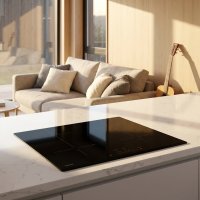
This large induction hob has completely transformed my kitchen. The energy efficiency is noticeable on my utility bills, and the instant heat control makes cooking so much more enjoyable. I can finally use my biggest stock pots without crowding the other burners. It’s truly a premium cooking experience.
I finally upgraded to a 90cm induction hob and it’s been a game changer for entertaining. We host a lot of family dinners, and having all that extra space for multiple pots and pans at once is incredible. The precision heating is also fantastic for delicate sauces. Highly recommend for anyone who loves to cook big meals!
I got an 80cm induction hob and while the cooking performance is great, I wish I’d paid more attention to the installation requirements. It needed a dedicated circuit, which added to the overall cost and complexity. Make sure you factor that in when planning your purchase, especially if you’re replacing an older appliance.
My new large induction cooktop is amazing for everyday use. I love how quickly water boils and how easy it is to clean spills. The only minor complaint is that the touch controls can be a bit sensitive sometimes, leading to accidental adjustments if I brush against them. Still, it’s a huge improvement over my old gas range.