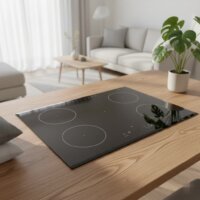
Induction hobs with knobs offer a unique blend of modern efficiency and intuitive, tactile control, making them a preferred choice for many home chefs. These hobs combine the modern electromagnetic heating technology of induction with the familiar, physical feedback of traditional dials, providing precise temperature adjustments and enhanced user-friendliness. This guide explores the benefits and features of knob-controlled induction cooktops.

Why Induction Hobs? A Quick Look at the Core Benefits
Before diving into the specifics of knob controls, let’s briefly appreciate the fundamental advantages that make induction hobs a major upgrade in any kitchen. Induction technology uses electromagnetic fields to heat your cookware directly, leaving the hob surface relatively cool. This ingenious method offers several compelling benefits:
- Exceptional Energy Efficiency: Induction hobs boast up to 90% energy efficiency, meaning more of the energy consumed goes directly into cooking your food, rather than escaping into the kitchen. This translates to lower energy bills and a more eco-friendly cooking process.
- Blazing Speed: Boiling water on an induction hob is remarkably fast. Many models can bring a liter of water to a rolling boil in just 3-4 minutes, significantly quicker than traditional gas or electric counterparts. This speed is a lifesaver for busy weeknights or when you’re entertaining.
- Enhanced Safety: Because the hob surface itself doesn’t generate heat directly, it remains much cooler than gas or ceramic hobs, reducing the risk of accidental burns. Most induction hobs also feature automatic pan detection and shut-off functions, adding an extra layer of safety, especially in households with children.
- Effortless Surface Cleaning: The smooth, flat glass surface of an induction hob prevents food spills from baking on, making cleanup a breeze. A simple wipe with a damp cloth is often all it takes to keep your hob sparkling.
The Tactile Advantage: Why Knobs Reign Supreme
While touch controls offer a minimalist aesthetic, many cooks find themselves yearning for the tangible feedback of physical knobs. When it comes to an induction hob, integrating knobs brings a host of practical advantages that elevate the cooking experience.
Intuitive Control at Your Fingertips
Imagine the ease of adjusting your heat settings without a second thought. Knob controls are inherently user-friendly and incredibly intuitive. There’s no learning curve, no searching for invisible ‘friction points’ on a glass panel; you simply twist a dial to get the desired power. This straightforward operation is especially appreciated by seasoned cooks who value a direct, reliable method of control.
Precision and Responsiveness
One of the most praised aspects of cooking with gas is the instant visual feedback of the flame and the immediate response to heat adjustments. Induction hobs with knobs offer a similar level of precise control and responsiveness. With a physical turn, you get instant feedback, allowing you to finely tune the temperature with confidence – crucial for delicate sauces or searing at high heat. Modern knob-controlled models often incorporate digital displays alongside the dials, giving you the best of both worlds: tactile control with digital accuracy.
Say Goodbye to Frustrations
|
Our Picks for the Best Induction Hob in 2026
As an Amazon Associate I earn from qualifying purchases.
|
||
| Num | Product | Action |
|---|---|---|
| 1 | Duxtop 1800W Portable Induction Cooktop Countertop Burner, Gold 8100MC/BT-180G3 |

|
| 2 | Duxtop Professional Portable Induction Cooktop, Commercial Range Countertop Burner, 1800 Watts Induction Burner with Sensor Touch and LCD Screen, P961LS/BT-C35-D, Silver/Black |
|
| 3 | ChangBERT Induction Cooktop, Commercial Grade Portable Cooker, Large 8” Heating Coil, Premium Stainless Steel Countertop Burner with NSF Certified, 10 Hours Timer Powerful 1800W Professional Hot Plate |
|
| 4 | AMZCHEF Portable-Induction-Cooktop: 74 Temperature Levels Induction Burner with Digital Probe, 1800W Countertop Burner with 20 Power Levels, 6.5\" Heating Coil, Low Noise Electric Cooktops with Timer |
|
| 5 | Nuwave Flex Precision Induction Cooktop, 10.25” Shatter-Proof Ceramic Glass, 6.5” Heating Coil, 45 Temps from 100°F to 500°F, 3 Wattage Settings 600, 900 & 1300 Watts, Black |
|
| 6 | AMZCHEF Portable Induction Cooktop 20 Temperature & Power Levels, 1800W Induction Stove Burner with 6.8\" Heating Coil, Low Noise Hot Plate Single Electric Cooktops Countertop Stove with Timer |
|
| 7 | Mueller RapidTherm Portable Induction Cooktop Hot Plate Countertop Burner 1800W, 8 Temp Levels, Timer, Auto-Shut-Off, Touch Panel, LED Display, Auto Pot Detection, Child Safety Lock, 4 Preset Programs |
|
| 8 | Portable Induction Cooktop 20 Temperature & Power Levels,1800W Single Burner Electric Cooktop with 6.8 inch Heating Coil,Low Noise Hot Plate with Timer |
|
| 9 | LỖI |
|
| 10 | Duxtop Portable Induction Cooktop Burner, Induction Hot Plate with LCD Sensor Touch 1800 Watts, Silver 9600LS/BT-200DZ |
|
Ever tried to adjust a touch control hob with wet or greasy hands? It can be a frustrating dance of unresponsive panels and accidental activations. Knobs eliminate these common kitchen woes. They provide a solid, physical interface that works reliably, even when your hands are a bit messy from cooking. This physical barrier also makes accidental changes less likely, offering a more secure cooking environment. As Chef Julian Thorne, a leading culinary expert and content creator for Gooau.com, aptly puts it: “In the fast-paced kitchen, true mastery comes from intuition. Knob-controlled induction hobs offer that direct, physical connection to your cooking, letting you feel every adjustment with confidence. It’s the best of both worlds: modern efficiency with timeless control.”
Durability and Longevity
High-quality knob controls are often built with robust materials designed to withstand the rigors of daily kitchen life. Paired with tempered-glass cooktops, these physical interfaces can offer excellent durability and a long lifespan, proving to be a reliable partner in your kitchen for years to come.
Weighing the Options: Knob vs. Touch Controls
Choosing between knob and touch controls on your induction hob often comes down to personal preference, but understanding the trade-offs can help you make an informed decision.
| Feature | Induction Hob with Knobs | Induction Hob with Touch Controls |
|---|---|---|
| Ease of Use | Intuitive, tactile, physical feedback, no learning curve. | Sleek, modern, but can have a learning curve for some. |
| Precision | Excellent, especially with modern stepped dials/digital display. | Often very precise with granular digital adjustments. |
| Responsiveness | Instantaneous physical response. | Very quick digital response. |
| Reliability | Works well even with wet/dirty hands, less accidental changes. | Can be sensitive to moisture, grease, or accidental touches. |
| Cleaning | Requires cleaning around knobs; can be slightly more cumbersome. | Flat surface, very easy to wipe clean. |
| Aesthetics | More traditional look, knobs protrude. | Ultra-sleek, minimalist, flush with the countertop. |
| Durability | Knobs can be highly durable. | Glass surface is generally durable, but touch sensors can fail. |
| Safety Features | Often includes child lock, auto-shutoff. | Often includes child lock, auto-shutoff. |
What to Look for in an Induction Hob with Knobs
When shopping for your ideal induction hob with knobs, consider these key factors to ensure you find the perfect fit for your kitchen and cooking style:
- Number and Size of Zones: Determine how many cooking zones you need and their sizes to accommodate your typical pots and pans. Some models offer flexible zones that can combine for larger cookware.
- Power Levels and Boost Function: Look for a good range of power settings (e.g., 9-17 levels) for precise control. A “Boost” function is invaluable for rapidly boiling water or quickly bringing pans to temperature.
- Child Lock and Safety Features: Beyond the inherent safety of induction, a dedicated child lock for the knobs provides extra peace of mind. Auto-pan detection and residual heat indicators are also important safety features.
- Integrated Digital Displays: Many modern knob-controlled hobs combine physical dials with subtle digital displays, offering the best of both worlds: tactile adjustment with clear, precise numerical feedback.
- Quality of Knob Construction: Durable, well-made knobs provide a satisfying feel and ensure longevity. Check for sturdy materials and smooth operation.
- Ease of Cleaning Around Knobs: While touch controls win on overall surface ease of cleaning, some knob designs are more considerate of spills and simplify the cleaning process around their bases.
Maintenance and Care for Your Knob-Controlled Induction Hob
Keeping your induction hob in top condition ensures its longevity and performance. Here are some maintenance tips, with a special note for those cherished knobs:
- Compatible Cookware is Key: Always use pots and pans made from ferrous (magnetic) materials like cast iron or stainless steel. Non-magnetic cookware simply won’t heat up. A quick magnet test on the bottom of your pan will confirm compatibility.
- Clean Regularly: Wipe down the glass surface after each use to prevent food residue from building up. For the area around the knobs, use a soft, damp cloth and a mild detergent to gently clean. Avoid abrasive cleaners or scouring pads that could scratch the surface or damage the knob’s finish.
- Clear Air Vents: Induction hobs have internal cooling fans. Ensure the air vents, typically located underneath or at the rear of the hob, are not obstructed to prevent overheating and ensure efficient operation.
- Proper Pan Placement: For optimal heating and to avoid error codes, ensure your cookware is centered on the induction zone.
- Handle Knobs Gently: While durable, avoid excessive force when turning or pulling the knobs to prevent damage over time.
Common Questions About Induction Hobs with Knobs
Are induction hobs with knobs harder to clean than touch control models?
Yes, generally, cleaning around physical knobs can be slightly more involved than simply wiping a flat touch-sensitive surface. Food and grease can accumulate at the base of the knobs, requiring a bit more attention. However, many find this a small trade-off for the tactile control.
Do I need special cookware for an induction hob with knobs?
Yes, like all induction hobs, models with knobs require cookware made from magnetic materials such as cast iron or magnetic stainless steel. If a magnet sticks firmly to the bottom of your pot or pan, it’s induction-ready.
Are induction hobs with knobs safe for families?
Absolutely. Induction technology itself is inherently safer than gas or traditional electric, as the cooking surface remains relatively cool. Knobs often provide a clearer visual indicator of whether a burner is active and many models include child lock functions, adding an extra layer of security.
Can I get precise temperature control with knobs?
Modern induction hobs with knobs offer excellent precision. Many feature multiple power levels (e.g., 9-17 settings) and some even combine knobs with digital displays for exact numerical feedback, allowing for very fine temperature adjustments.
What brands offer induction hobs with physical knobs?
While touch controls are prevalent, several reputable brands offer induction hobs with knobs to cater to diverse preferences. Brands like Smeg, Gaggenau, Viking, Frigidaire, and LG have been known to offer models with physical controls. We recommend checking current product lines from manufacturers to find the latest options.
Conclusion
The induction hob with knobs represents a beautiful marriage of form and function: the unrivaled efficiency and safety of modern induction technology, coupled with the reassuringly familiar and precise control of physical dials. For those who value intuitive operation, tactile feedback, and a reliable cooking experience, these hobs are a fantastic choice. At Gooau, we believe your kitchen appliances should empower your culinary journey, making cooking not just a task, but a true joy. Embrace the control, enjoy the efficiency, and cook with confidence – your induction hob with knobs is ready to help you create culinary magic.
Frequently Asked Questions
Are induction hobs with knobs harder to clean than touch control models?
Yes, generally, cleaning around physical knobs can be slightly more involved than simply wiping a flat touch-sensitive surface. Food and grease can accumulate at the base of the knobs, requiring a bit more attention. However, many users find this a small trade-off for the tactile control and reliability.
Do I need special cookware for an induction hob with knobs?
Yes, like all induction hobs, models with knobs require cookware made from magnetic materials such as cast iron or magnetic stainless steel. A quick magnet test on the bottom of your pot or pan will confirm compatibility. Non-magnetic cookware will not heat up on an induction surface.
Are induction hobs with knobs safe for families with children?
Absolutely. Induction technology is inherently safer than gas or traditional electric, as the cooking surface remains relatively cool. Knobs often provide a clearer visual indicator of whether a burner is active, and many models include child lock functions for added security, reducing accidental adjustments.
Can I get precise temperature control with knob-controlled induction hobs?
Modern induction hobs with knobs offer excellent precision. Many models feature multiple power levels, typically ranging from 9 to 17 settings, allowing for very fine temperature adjustments. Some even combine physical knobs with digital displays for exact numerical feedback, enhancing accuracy.
What brands offer induction hobs with physical knob controls?
While touch controls are prevalent, several reputable brands offer induction hobs with knobs to cater to diverse preferences. Brands like Smeg, Gaggenau, Viking, Frigidaire, and LG have been known to offer models with physical controls. It is recommended to check current product lines from manufacturers for the latest options.
Cooking gear we tested in our own kitchens
Free PDF — preheat times measured on 10 popular air fryers.
I was hesitant to switch from my old gas range, but the energy efficiency of induction really sold me. This guide helped me find a great hob with knobs, which was a must-have for me. The tactile control makes such a difference, especially when I’m trying to simmer something delicate. It heats up so fast and cleanup is a breeze.
Finally made the switch to an induction hob with knobs and I couldn’t be happier! The electromagnetic heating technology is truly a game-changer for my daily cooking. I love how the surface stays relatively cool, making it much safer with kids around. It’s so much easier to clean than my previous stovetop too.
I’ve been using my new induction cooktop for a few weeks now and I’m really impressed with the precise temperature adjustments. It’s a huge upgrade from my old electric coil stove. My only minor complaint is that the knobs on my model feel a little less sturdy than I expected, but they still work perfectly fine. Overall, a solid purchase.
I love the idea of induction and the speed is incredible, but I’m still getting used to the specific cookware requirements. My old aluminum pans are useless now, which was a bit of an unexpected expense. The knobs are great for control, but I wish there was more clarity upfront about needing all new pots and pans. It’s a learning curve.