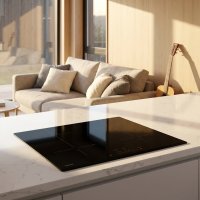
Stepping into a modern kitchen, you’re immediately struck by the sleek, minimalist appeal of electric hobs. Gone are the days of clunky coil burners; today, it’s all about smooth, glass surfaces. But beneath that gleaming exterior lies a fundamental choice: induction or ceramic? As someone with over 15 years of hands-on experience in the world of induction cooking, and as a content creator for gooau.com, I’ve seen countless kitchens transformed by these technologies. The truth is, while they might look like close cousins, they operate on entirely different principles, leading to distinct cooking experiences. Let’s peel back the layers and discover which powerhouse truly belongs in your culinary domain.
Understanding the Fundamentals: How Do They Work?
At first glance, an induction hob and a ceramic hob appear almost identical—both boast a flat, black glass surface that effortlessly integrates into any kitchen design. However, the similarities largely end there. The real difference lies in the unseen magic happening beneath the surface, dictating everything from cooking speed to safety.
The Magic of Induction: Magnetic Mastery
Imagine heating your pan directly, with the hob itself remaining relatively cool. That’s the wizardry of induction cooking. Beneath the ceramic glass surface, induction hobs house copper coils. When you switch it on and place a compatible pan, an alternating electric current flows through these coils, generating an oscillating magnetic field. This magnetic field, in turn, induces electrical currents, known as “eddy currents,” directly within the ferromagnetic base of your cookware. It’s these eddy currents that generate heat, making the pan itself the primary heat source. The hob’s surface only warms up from residual heat transferred back from the hot pan. This direct heating method is what makes induction so incredibly fast and efficient.
Ceramic Hobs: Radiant Heat, Reliable Performance
Ceramic hobs, often correctly referred to as radiant hobs, employ a more conventional approach to heating. Beneath their smooth glass surface are high-powered heating elements, typically coiled metal. When activated, electricity passes through these elements, causing them to glow red and generate radiant heat. This heat then transfers from the element, through the ceramic glass, and finally to the bottom of your pot or pan. Unlike induction, the entire cooking zone, and indeed the surrounding hob surface, becomes hot to the touch. This method provides consistent, albeit slower, heat distribution to your cookware.
The Battle of Performance: Speed, Control, and Efficiency
When it comes to daily cooking, performance is king. How quickly can you get dinner on the table? How precisely can you control your culinary creations? And how much is it going to cost you in electricity bills?
Cooking Speed: Who Wins the Race?
|
Our Picks for the Best Induction Hob in 2026
As an Amazon Associate I earn from qualifying purchases.
|
||
| Num | Product | Action |
|---|---|---|
| 1 | Mueller RapidTherm Portable Induction Cooktop Hot Plate Countertop Burner 1800W, 8 Temp Levels, Timer, Auto-Shut-Off, Touch Panel, LED Display, Auto Pot Detection, Child Safety Lock, 4 Preset Programs |

|
| 2 | Duxtop Portable Induction Cooktop Burner, Induction Hot Plate with LCD Sensor Touch 1800 Watts, Silver 9600LS/BT-200DZ |
|
| 3 | AMZCHEF Portable-Induction-Cooktop: 74 Temperature Levels Induction Burner with Digital Probe, 1800W Countertop Burner with 20 Power Levels, 6.5\" Heating Coil, Low Noise Electric Cooktops with Timer |
|
| 4 | Duxtop 1800W Portable Induction Cooktop Countertop Burner, Gold 8100MC/BT-180G3 |
|
| 5 | ChangBERT Induction Cooktop, Commercial Grade Portable Cooker, Large 8” Heating Coil, Premium Stainless Steel Countertop Burner with NSF Certified, 10 Hours Timer Powerful 1800W Professional Hot Plate |
|
| 6 | LỖI |
|
| 7 | Duxtop Professional Portable Induction Cooktop, Commercial Range Countertop Burner, 1800 Watts Induction Burner with Sensor Touch and LCD Screen, P961LS/BT-C35-D, Silver/Black |
|
| 8 | AMZCHEF Portable Induction Cooktop 20 Temperature & Power Levels, 1800W Induction Stove Burner with 6.8\" Heating Coil, Low Noise Hot Plate Single Electric Cooktops Countertop Stove with Timer |
|
| 9 | Nuwave Flex Precision Induction Cooktop, 10.25” Shatter-Proof Ceramic Glass, 6.5” Heating Coil, 45 Temps from 100°F to 500°F, 3 Wattage Settings 600, 900 & 1300 Watts, Black |
|
| 10 | Portable Induction Cooktop 20 Temperature & Power Levels,1800W Single Burner Electric Cooktop with 6.8 inch Heating Coil,Low Noise Hot Plate with Timer |
|
If speed is your priority, induction takes the checkered flag without a doubt. Because induction hobs heat the cookware directly through an electromagnetic field, they can bring water to a boil significantly faster than ceramic hobs. There’s minimal energy lost in the transfer process, meaning nearly all the heat goes straight into your food. Ceramic hobs, conversely, require the heating elements and the glass surface to heat up first before transferring that energy to your pan. This indirect heat transfer results in longer heat-up times. Think of it like this: induction is a direct sprint, while ceramic is a warm-up jog before the race.
Precision Temperature Control: From Simmer to Sizzle
For the avid cook, precise temperature control is invaluable, and here, induction shines brightly. The electromagnetic field can be adjusted almost instantaneously, providing immediate changes in heat output. This means you can go from a rolling boil to a gentle simmer with the touch of a button, much like cooking with gas. This responsiveness allows for greater control over delicate sauces or searing meats perfectly. Ceramic hobs, while offering various heat settings, react more slowly to adjustments. The residual heat in the elements and the glass surface means it takes time for the temperature to rise or fall, making fine-tuning a bit more challenging.
Energy Efficiency: Saving Pennies, Saving the Planet
Energy efficiency is a major consideration for any modern appliance, and induction hobs are generally the more economical choice in the long run. Their direct heating method minimizes heat loss into the surrounding air, making them remarkably efficient—often up to 84-90% efficient. This means more of your electricity bill goes directly towards cooking your food. Ceramic hobs, by design, lose more heat to the kitchen environment because they heat the entire cooking surface. While they are still more efficient than traditional electric coil hobs, they typically operate at a lower efficiency rate compared to induction. Over time, these savings can add up, making induction a smart investment for your wallet and the environment.
Safety First: A Closer Look at Features
Safety in the kitchen is paramount, especially in busy households. Both hob types have safety features, but induction offers some inherent advantages due to its operational mechanism.
Surface Heat: A Hot Topic
One of induction’s most significant safety benefits is its cooler surface. Since heat is generated directly in the pan, the hob surface itself remains relatively cool, warming only from the heat conducted back from the cookware. This dramatically reduces the risk of accidental burns. Spills that occur on an induction hob are less likely to burn and stick, making cleanup easier and safer. Ceramic hobs, on the other hand, become very hot during operation and retain significant heat even after being turned off. Most ceramic hobs come equipped with residual heat indicators (often an “H” symbol) to warn you when a zone is still too hot to touch.
Pan Detection and Auto Shut-off
Many induction hobs include intelligent pan detection technology. If a suitable pan isn’t placed on a cooking zone, or if it’s removed, the hob simply won’t activate or will automatically shut off, saving energy and preventing unsupervised heating. This also means if you accidentally turn on an empty zone, nothing happens. While some advanced ceramic hobs may offer automatic shut-off features for prolonged inactivity, they don’t have the same immediate pan detection capabilities.
Child Locks and Residual Heat Indicators
Both induction and ceramic hobs often include child safety locks, preventing little hands from accidentally turning on or changing settings. However, the cooler surface of an induction hob provides an extra layer of peace of mind, as even if a child touches an active zone without a pan, the risk of a severe burn is minimal compared to a ceramic hob.
Cleaning and Maintenance: Keeping Your Kitchen Sparkles
A clean kitchen is a happy kitchen. The smooth glass surfaces of both hob types are generally easier to clean than traditional gas burners, but there are subtle differences.
Spills and Splashes: The Cleanup Challenge
Induction hobs excel in the cleanup department. Because the surface remains cooler, food spills are far less likely to bake onto the glass, making them incredibly easy to wipe clean with a cloth or sponge, even during cooking. This means less scrubbing and less worry about stubborn, burnt-on residues. With ceramic hobs, any spills on the hot surface will quickly cook and stick, often requiring more effort, specialized cleaners, and potentially a scraper to remove without scratching the surface.
Durability and Scratch Resistance
Both hob types feature durable glass-ceramic surfaces designed to withstand high temperatures and daily use. However, they are not entirely immune to scratches or cracks from heavy impacts. While induction surfaces tend to accumulate fewer burnt-on messes, both benefit from careful handling of pots and pans to prevent scratches. Always lift cookware rather than sliding it across the surface to preserve its pristine look.
The Cost Factor: Beyond the Purchase Price
Budget is always a factor in appliance purchasing. It’s important to consider both the initial outlay and the long-term running costs.
Initial Investment: Upfront Costs
Generally, induction hobs come with a higher upfront purchase price than ceramic hobs. This is due to the more advanced technology involved in their electromagnetic heating system. Ceramic hobs, offering a more basic resistive heating method, are often the more budget-friendly option for the initial purchase.
Long-Term Running Costs
Despite the higher initial cost, induction hobs can prove to be more economical over their lifespan due to their superior energy efficiency. The reduced cooking times and minimal heat loss translate directly into lower electricity bills. While ceramic hobs are cheaper to buy, their higher energy consumption means they can cost more to run over time. It’s a classic case of investing more upfront to save more later.
Installation Considerations
Both induction and ceramic hobs typically require a dedicated electrical connection. If you’re replacing an existing ceramic hob with an induction model, it’s often a straightforward swap as the cut-out dimensions are frequently similar. However, it’s always wise to consult an electrician and check product specifications to ensure compatibility and safe installation.
Cookware Compatibility: What Pots and Pans Do You Need?
This is a critical point of differentiation and can be a deal-breaker for some home cooks.
Induction: The Magnetic Attraction
Induction hobs require cookware with a ferromagnetic base. This means your pots and pans must be magnetic for the induction technology to work. Cast iron, magnetic stainless steel, and carbon steel are all ideal. If a magnet sticks firmly to the bottom of your pan, it’s induction compatible. Non-magnetic materials like aluminum, copper, or glass will not work unless they have a bonded magnetic layer on the base. If you’re switching to induction, you might need to invest in a new set of cookware, which adds to the overall cost.
Ceramic: Universal Appeal
Ceramic hobs are far more forgiving when it comes to cookware. Because they rely on radiant heat transfer, they are compatible with virtually all types of pots and pans, regardless of their material, as long as they have a flat base for efficient contact. This versatility is a big plus if you want to keep your existing collection of cookware.
Aesthetics and Kitchen Design: Blending Seamlessly
Both induction and ceramic hobs offer a sleek, modern aesthetic that enhances contemporary kitchen designs. Their flat, black glass surfaces create a seamless look with countertops, contributing to a clean and uncluttered environment. Many models feature touch controls, further streamlining the appearance. The choice between them based purely on looks is often negligible, as they share this common design language.
Expert Insight: Which Hob is Right for You?
Choosing between an induction and a ceramic hob really boils down to your cooking habits, priorities, and budget. As an expert who has guided countless individuals through this decision, I often tell my clients to consider what truly matters most in their daily kitchen routine.
“For professional-level precision and uncompromising safety, induction is the clear winner,” says Eleanor Vance, Head Chef at The Gilded Spoon. “The immediate response to temperature changes and the cool surface truly elevate the cooking experience, making complex dishes more approachable and the kitchen a safer space.”
If you’re a passionate cook who values speed, precise control, energy efficiency, and advanced safety features, and you’re willing to invest in new, compatible cookware, an induction hob is likely your ideal choice. It offers a premium cooking experience that rivals, and often surpasses, gas.
However, if affordability, cookware versatility, and a straightforward cooking experience are your top priorities, a ceramic hob remains an excellent and reliable option. It provides a sleek aesthetic and consistent heat, making it a solid workhorse for everyday cooking without requiring an investment in new pots and pans.
Frequently Asked Questions (FAQ)
Q1: Is an induction hob really faster than ceramic?
Yes, absolutely. Induction hobs heat significantly faster than ceramic hobs because they generate heat directly within the pan itself through electromagnetic induction, minimizing energy loss and speeding up the cooking process.
Q2: Can I use my old pans on an induction hob?
You can only use your old pans on an induction hob if they have a magnetic base. To check, simply place a magnet on the bottom of your pan; if it sticks firmly, your pan is induction compatible.
Q3: Are ceramic hobs difficult to clean?
While ceramic hobs have a smooth, wipe-clean surface, spills can easily burn onto the hot glass, making them more challenging to clean than induction hobs where food is less likely to bake on.
Q4: What’s the main safety advantage of induction?
The primary safety advantage of an induction hob is that its surface remains relatively cool during cooking, only warming from residual heat transferred back from the pan. This drastically reduces the risk of accidental burns compared to a ceramic hob, which heats up considerably.
Q5: Is induction more expensive to run?
No, in the long term, induction hobs are generally more energy-efficient and thus cheaper to run than ceramic hobs. While their initial purchase price is often higher, their reduced energy consumption can lead to significant savings on utility bills over time.
Conclusion
Choosing between an induction and ceramic hob is a significant decision that impacts your daily cooking, kitchen safety, and long-term expenses. Both offer a modern, sleek aesthetic, but their underlying technologies provide distinct advantages. Induction hobs excel in speed, precision, energy efficiency, and safety, making them a premium choice for the discerning chef. Ceramic hobs, while more budget-friendly and universally compatible with cookware, offer a reliable and consistent cooking experience. Ultimately, the best hob for you aligns with your personal cooking style, priorities, and budget. Whichever you choose, embracing either of these technologies promises a cleaner, more streamlined kitchen experience. Take the time to weigh these factors, and you’ll be well on your way to selecting the perfect kitchen companion that enhances your culinary journey for years to come.
Cooking gear we tested in our own kitchens
Free PDF — preheat times measured on 10 popular air fryers.