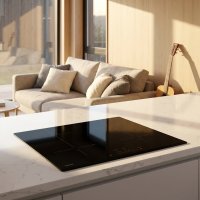
Transforming your campervan kitchen into a culinary haven is a dream for many, and the induction hob is fast becoming the star of the show. As a leading expert in induction cooking with over 15 years of hands-on experience, and content creator for Gooau.com, I’ve seen firsthand how these clever appliances revolutionize mobile living. Forget bulky gas canisters and finicky flames; induction hobs offer a sleek, safe, and surprisingly efficient way to cook on the go.
In this comprehensive guide, we’ll dive deep into everything you need to know about integrating an induction hob into your campervan. From understanding power demands to choosing the right model and installation tips, we’ll ensure you’re well-equipped to make the switch and enjoy gourmet meals wherever your adventures take you.
Why an Induction Hob is a Game-Changer for Campervans
Imagine whipping up a quick breakfast or a hearty dinner without the worry of open flames or gas leaks. That’s the promise of an induction hob in your campervan. They are more than just a modern convenience; they offer significant advantages that are particularly appealing for life on the road.
Enhanced Safety on the Move
Safety is paramount in a compact living space, and induction hobs shine here. Unlike gas or traditional electric cooktops, the surface of an induction hob doesn’t get hot unless a suitable magnetic pan is placed on it. This significantly reduces the risk of accidental burns or fires, especially important when driving or with children and pets around. There are no naked flames to contend with, minimizing fire hazards from loose clothing or curtains. Good quality induction hobs often include features like auto-pan detection and overheating protection, adding extra layers of security.
Superior Efficiency and Control
Induction technology works by using electromagnetic fields to heat the cookware directly, rather than heating the hob surface itself. This means less energy is wasted, making them incredibly efficient. Water boils almost twice as fast on an induction hob compared to a gas burner, getting your meals ready quicker. The precise temperature control allows for everything from a gentle simmer to a rapid boil, giving you professional-level cooking versatility.
Cleaner Air and Easier Maintenance
One often overlooked benefit is improved air quality. Gas hobs produce combustion fumes and moisture, which can be a constant battle in a small, enclosed space like a campervan. Induction hobs produce no such emissions, contributing to a healthier and less humid interior environment. Plus, with a smooth, flat glass surface, cleaning spills is a breeze – a simple wipe is usually all it takes.
Powering Your Campervan Induction Hob: The Electrical System Essentials
The biggest consideration when opting for an induction hob in your campervan is undoubtedly the electrical system. Induction hobs are power-hungry, requiring a robust setup to function effectively, especially if you plan on extended off-grid adventures.
Understanding Wattage and Amperage
|
Our Picks for the Best Induction Hob in 2026
As an Amazon Associate I earn from qualifying purchases.
|
||
| Num | Product | Action |
|---|---|---|
| 1 | LỖI |

|
| 2 | Duxtop Portable Induction Cooktop Burner, Induction Hot Plate with LCD Sensor Touch 1800 Watts, Silver 9600LS/BT-200DZ |
|
| 3 | Duxtop 1800W Portable Induction Cooktop Countertop Burner, Gold 8100MC/BT-180G3 |
|
| 4 | Mueller RapidTherm Portable Induction Cooktop Hot Plate Countertop Burner 1800W, 8 Temp Levels, Timer, Auto-Shut-Off, Touch Panel, LED Display, Auto Pot Detection, Child Safety Lock, 4 Preset Programs |
|
| 5 | Nuwave Flex Precision Induction Cooktop, 10.25” Shatter-Proof Ceramic Glass, 6.5” Heating Coil, 45 Temps from 100°F to 500°F, 3 Wattage Settings 600, 900 & 1300 Watts, Black |
|
| 6 | AMZCHEF Portable Induction Cooktop 20 Temperature & Power Levels, 1800W Induction Stove Burner with 6.8\" Heating Coil, Low Noise Hot Plate Single Electric Cooktops Countertop Stove with Timer |
|
| 7 | Duxtop Professional Portable Induction Cooktop, Commercial Range Countertop Burner, 1800 Watts Induction Burner with Sensor Touch and LCD Screen, P961LS/BT-C35-D, Silver/Black |
|
| 8 | Portable Induction Cooktop 20 Temperature & Power Levels,1800W Single Burner Electric Cooktop with 6.8 inch Heating Coil,Low Noise Hot Plate with Timer |
|
| 9 | ChangBERT Induction Cooktop, Commercial Grade Portable Cooker, Large 8” Heating Coil, Premium Stainless Steel Countertop Burner with NSF Certified, 10 Hours Timer Powerful 1800W Professional Hot Plate |
|
| 10 | AMZCHEF Portable-Induction-Cooktop: 74 Temperature Levels Induction Burner with Digital Probe, 1800W Countertop Burner with 20 Power Levels, 6.5\" Heating Coil, Low Noise Electric Cooktops with Timer |
|
Most induction hobs designed for campervans will have a maximum wattage between 1500W and 2000W for a single burner, and up to 2800W for a double burner. It’s crucial to understand that these are maximums. In practice, you often won’t run them at full power. For instance, a single 2kW unit might draw just over 8A when turned up fully. Double hobs, if used concurrently at full power, can easily trip a standard 10A breaker found in many campsites. However, running both burners at just over half power (around 1.6kW) often works perfectly.
“Many assume induction hobs are not viable in a camper because they only consider the maximum wattage (often 3500W for dual zones). However, nobody uses both zones on maximum simultaneously, even at home. Real-world usage is significantly lower,” says Eleanor Vance, a leading expert in mobile energy systems.
The Inverter: Your AC Powerhouse
Your campervan typically runs on a 12V DC electrical system, while most induction hobs require 230V AC (or 120V AC in some regions). This means a high-quality inverter is essential to convert your battery’s DC power to usable AC power. You’ll need an inverter capable of delivering at least 2000W continuously. It’s often recommended to have a buffer, so a 3000W inverter is a safer bet to avoid frequent tripping, especially if you plan to run other appliances simultaneously.
Battery Bank Capacity: Fueling Your Culinary Adventures
To support an induction hob, you’ll need a substantial battery bank. Lithium (LiFePO4) batteries are highly recommended over lead-acid batteries due to their superior efficiency, higher usable capacity, and longer cycle life. A single 100Ah lithium battery can typically support about a 1000W inverter. For a robust system supporting a 2000W inverter, at least three 100Ah lithium batteries are advisable, while a 3000W inverter would ideally be paired with at least four 100Ah batteries.
A typical pasta meal for two might consume around 25Ah of battery capacity, depending on the hob and pan efficiency. This highlights the need for careful power budgeting and a sizeable battery setup.
Solar Power and Charging: Staying Off-Grid
While you don’t need an excessive amount of solar panels, they are crucial for replenishing your battery bank and extending your off-grid time. Even 320 Watts of solar panels can provide significant charging, especially when supplemented by your alternator while driving. This combination allows for multiple days of off-grid living, even with induction cooking.
Types of Induction Hobs for Campervans
Choosing the right induction hob depends on your cooking habits, available space, and budget.
Portable vs. Integrated
- Portable Induction Hobs: These are a flexible and often more affordable option. They can be easily moved, used indoors or outdoors with an extension lead, and stored away when not needed. Models like the Vango Sizzle Induction Hob boast low wattages, making them highly efficient for campervan use.
- Integrated (Fixed) Induction Hobs: For a more permanent and seamless kitchen, integrated hobs are cut directly into your countertop, providing a clean, flush finish. Brands like Sterling Power offer excellent fixed single and twin induction hobs designed for campervans. They offer a more “home-like” kitchen feel.
Single vs. Double Burner
- Single Burner: Perfect for solo travelers or couples with limited space or simple cooking needs. They typically have lower power requirements.
- Double Burner: Ideal for families or those who enjoy more elaborate cooking, allowing you to prepare multiple dishes simultaneously. Remember, while a double burner offers convenience, it also demands more power, so ensure your electrical system can handle the load.
Installation Tips and Best Practices
Installing an induction hob in your campervan involves more than just plugging it in. Here are some key tips for a safe and successful setup:
- Measure Accurately: Before purchasing, carefully measure your available kitchen space to ensure the hob fits seamlessly without taking up too much valuable countertop.
- Ensure Proper Ventilation: While induction hobs don’t produce combustion fumes, proper ventilation is still important, especially for heat dissipation from the electronics.
- Secure Mounting: For integrated hobs, secure mounting is essential. Many come with brackets and screws to fix them firmly into the countertop, often with a sealed edge to prevent spills from seeping into the cabinetry.
- Wiring and Inverter Connection: Your induction hob will connect to your inverter. Ensure all wiring is done correctly and safely, ideally by a qualified electrician, to prevent short-circuiting or electrical fires.
- Cookware Compatibility: Remember that induction hobs only work with magnetic cookware. Pots and pans with an iron or steel base are suitable. Always check for the induction-compatible symbol on the base of your cookware.
Induction Hob vs. Gas Hob: Making the Right Choice
The “induction vs. gas” debate is common in the campervan community. Both have merits, and the best choice depends on your lifestyle.
| Feature | Induction Hob | Gas Hob |
|---|---|---|
| Safety | No open flame, cool-to-touch surface, no gas leaks. | Open flame, potential for gas leaks, CO risk. |
| Efficiency | Highly efficient (85-90% energy transfer). | Less efficient (40-55% energy transfer). |
| Cooking Speed | Very fast, instant heat. | Fast, but not as quick as induction. |
| Air Quality | No fumes or condensation. | Produces fumes and moisture. |
| Power Source | Requires robust electrical system (battery, inverter). | LPG (propane/butane) cylinders/tanks. |
| Installation | More complex electrical setup. | Simpler, but requires gas safe installation. |
| Cost (Initial) | Higher due to electrical system upgrades. | Generally lower. |
| Off-Grid Viability | Possible with large battery/solar, but power-intensive. | Excellent, long-lasting fuel source. |
For the weekend warrior who frequently uses campsite hookups, an induction hob is an excellent, hassle-free choice. For full-time off-grid living, a gas hob might still be more practical due to fuel longevity and less reliance on a massive electrical system. However, advancements in battery and solar technology are rapidly closing this gap, making all-electric campervans with induction hobs increasingly feasible.
Choosing the Right Induction Hob for Your Campervan
When selecting your induction hob, consider these factors:
- Wattage and Power Settings: Look for models with variable power settings to manage your energy consumption. Some go down to as low as 100 watts.
- Size and Burners: Match the hob’s dimensions and number of burners to your available space and cooking needs.
- Safety Features: Prioritize models with auto-pan detection, overheating protection, and timer functions.
- Brand Reputation: Opt for reputable brands known for quality and durability in mobile applications. Sterling Power and Thetford are often mentioned for campervan-specific models.
- Portability vs. Fixed: Decide if you need the flexibility of a portable unit or the integrated look of a fixed hob.
Maintenance and Troubleshooting
Induction hobs are generally low maintenance.
- Cleaning: Wipe down the cool surface after each use with a damp cloth and mild detergent.
- Error Codes: Familiarize yourself with common error codes (e.g., “no pan” or “unsuitable pan”) which can help in quick troubleshooting.
- Power Issues: If your hob isn’t working, check your inverter, battery levels, and circuit breakers. Ensure your power supply is stable.
Frequently Asked Questions (FAQ)
Are 12V induction hobs available for campervans?
While some sources might mention them, truly native 12V DC induction hobs are not widely available or practical for high-power cooking. Most induction hobs require a 230V AC supply, meaning you’ll need an inverter to convert your campervan’s 12V DC power.
How much battery capacity do I need for an induction hob?
A robust electrical system with at least 300-400Ah of lithium battery capacity is a good starting point for regular induction cooking, especially if you plan to be off-grid. This should be paired with a sufficiently sized inverter (2000W-3000W).
Can I use a domestic induction hob in my campervan?
While technically possible, domestic induction hobs often have much higher wattage ratings (e.g., 6400W for a 4-ring hob) than your campervan’s electrical system can support. It’s best to choose lower wattage models designed specifically for mobile use to prevent overworking your inverter.
Do induction hobs drain the battery quickly?
Yes, induction hobs are power-intensive. A single cooking session can consume a significant amount of battery power. For example, boiling a kettle for two people might use 3% of a 300Ah battery, while cooking a full meal could deplete 13%. Careful power management and a strong charging system are crucial.
What kind of pans work with an induction hob?
Only cookware with a magnetic base will work. Cast iron, magnetic stainless steel, and pans specifically labeled “induction compatible” are suitable. You can test your pans with a magnet – if it sticks, it will work on an induction hob.
Ready to Electrify Your Campervan Kitchen?
Embracing an induction hob in your campervan is a smart move for safety, efficiency, and a truly modern cooking experience on the road. While it requires a more substantial investment in your electrical system, the benefits—from flame-free cooking to quick meals and easy cleanup—make it a worthwhile upgrade for many van life enthusiasts. At Gooau.com, we believe in empowering you with the knowledge to make informed decisions. By understanding the power demands, choosing the right equipment, and following best practices, you can confidently install and enjoy your induction hob, elevating your campervan adventures one delicious meal at a time. What culinary delights will you create first in your new induction-powered campervan kitchen?
Cooking gear we tested in our own kitchens
Free PDF — preheat times measured on 10 popular air fryers.