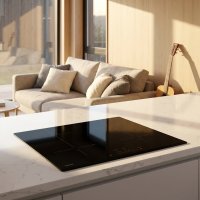
As someone who’s spent over fifteen years immersed in the world of induction cooking, I can tell you there’s a certain magic to it. And when it comes to versatile, reliable, and efficient options, the Caterlite induction hob consistently catches my eye. Whether you’re a home cook looking for a powerful extra burner, a mobile caterer needing robust portability, or a professional chef seeking a dependable backup, understanding this workhorse can truly elevate your kitchen game. Let’s uncover what makes these hobs a popular choice and how to get the most out of yours.

What Makes a Caterlite Induction Hob Stand Out?
When you first encounter a Caterlite induction hob, you might be struck by its sleek, unassuming design. But don’t let that fool you; these units pack a punch far beyond their appearance. They’re designed with both efficiency and user experience in mind, translating into real benefits in your daily cooking.
Energy Efficiency and Speed
One of the biggest advantages of any induction hob, and certainly a hallmark of the Caterlite range, is its incredible efficiency. Unlike traditional electric or gas hobs that heat the cooking surface, Caterlite induction hobs create a magnetic field that directly heats your cookware. This means significantly less energy wasted into the air and more channeled precisely where it’s needed – into your food. This translates to faster boil times, quicker searing, and ultimately, lower running costs. Think of it like a laser focus for your heat, instead of a broad floodlight.
Precision Cooking at Your Fingertips
Have you ever struggled to get that perfect simmer or a consistent, gentle heat? The Caterlite induction hob makes precision cooking surprisingly easy. With multiple power settings, often ranging from 6 to 10 levels, and a wide temperature range (typically 60-240°C), you have granular control over your cooking environment. This allows you to go from a rolling boil to a delicate melt with just a few taps. Plus, many models feature an integrated timer, usually up to 180 minutes, which automatically shuts off the hob. It’s a lifesaver when you’re juggling multiple dishes or need to step away for a moment.
Built for Convenience and Durability
Caterlite understands that cooking isn’t always confined to a fixed kitchen. Their induction hobs are often compact and lightweight, featuring durable stainless steel and robust polycarbonate bodies topped with easy-to-clean ceramic glass. This makes them incredibly portable – perfect for events, demonstrations, or simply as an extra cooking zone when entertaining. The flat glass surface isn’t just stylish; it makes spills and splatters a breeze to wipe away, keeping your cooking area pristine.
“From my perspective, the true brilliance of the Caterlite induction hob lies in its adaptability,” says culinary engineering specialist, Dr. Elena Petrova. “It brings professional-grade efficiency and control to a countertop format, democratizing advanced cooking techniques for a wider audience.”
Getting Started: Using Your Caterlite Induction Hob
Ready to fire up your Caterlite induction hob? Here’s what you need to know to get cooking safely and effectively.
Choosing the Right Cookware
|
Our Picks for the Best Induction Hob in 2026
As an Amazon Associate I earn from qualifying purchases.
|
||
| Num | Product | Action |
|---|---|---|
| 1 | AMZCHEF Portable Induction Cooktop 20 Temperature & Power Levels, 1800W Induction Stove Burner with 6.8\" Heating Coil, Low Noise Hot Plate Single Electric Cooktops Countertop Stove with Timer |

|
| 2 | Mueller RapidTherm Portable Induction Cooktop Hot Plate Countertop Burner 1800W, 8 Temp Levels, Timer, Auto-Shut-Off, Touch Panel, LED Display, Auto Pot Detection, Child Safety Lock, 4 Preset Programs |
|
| 3 | Duxtop 1800W Portable Induction Cooktop Countertop Burner, Gold 8100MC/BT-180G3 |
|
| 4 | Nuwave Flex Precision Induction Cooktop, 10.25” Shatter-Proof Ceramic Glass, 6.5” Heating Coil, 45 Temps from 100°F to 500°F, 3 Wattage Settings 600, 900 & 1300 Watts, Black |
|
| 5 | AMZCHEF Portable-Induction-Cooktop: 74 Temperature Levels Induction Burner with Digital Probe, 1800W Countertop Burner with 20 Power Levels, 6.5\" Heating Coil, Low Noise Electric Cooktops with Timer |
|
| 6 | ChangBERT Induction Cooktop, Commercial Grade Portable Cooker, Large 8” Heating Coil, Premium Stainless Steel Countertop Burner with NSF Certified, 10 Hours Timer Powerful 1800W Professional Hot Plate |
|
| 7 | Duxtop Portable Induction Cooktop Burner, Induction Hot Plate with LCD Sensor Touch 1800 Watts, Silver 9600LS/BT-200DZ |
|
| 8 | LỖI |
|
| 9 | Portable Induction Cooktop 20 Temperature & Power Levels,1800W Single Burner Electric Cooktop with 6.8 inch Heating Coil,Low Noise Hot Plate with Timer |
|
| 10 | Duxtop Professional Portable Induction Cooktop, Commercial Range Countertop Burner, 1800 Watts Induction Burner with Sensor Touch and LCD Screen, P961LS/BT-C35-D, Silver/Black |
|
This is perhaps the most crucial tip for any induction hob owner: you must use induction-compatible cookware. If a magnet sticks firmly to the bottom of your pot or pan, you’re good to go! Materials like cast iron, magnetic stainless steel, and some enameled steel will work beautifully. Aluminum, glass, and copper pans, unless they have a magnetic base layer, simply won’t heat up. Your Caterlite hob will likely display an “E0” error code if it doesn’t detect suitable cookware, so keep a small magnet handy if you’re ever unsure about your pots and pans. Also, pay attention to the minimum and maximum pan sizes specified in your hob’s manual; typically, pans between 120mm and 240mm diameter work best for optimal performance.
Basic Operation: Power, Temperature, and Timer
Operating a Caterlite induction hob is straightforward thanks to its intuitive digital controls and LED display.
- Placement: Place your induction-ready pot or pan firmly on the center of the hob’s cooking zone.
- Power On: Plug in the hob and press the On/Off button.
- Select Mode: Most Caterlite models allow you to choose between a specific power level (e.g., 1-10) or a target temperature (e.g., 60-240°C). Use the “Function” or “Select” button to toggle between these modes.
- Adjust Settings: Use the increase/decrease buttons to set your desired power level or temperature.
- Set the Timer (Optional): If you need a specific cooking duration, press the “Timer” button, then use the increase/decrease buttons to set the time. The hob will automatically switch off when the timer expires.
The instant response of induction means adjustments take effect almost immediately, giving you unprecedented control over your culinary creations.
Troubleshooting Common Caterlite Induction Hob Issues
Even the most reliable appliances can sometimes encounter a hiccup. Here are a couple of common issues you might face with your Caterlite induction hob and how to resolve them.
Why isn’t my hob heating up?
If your Caterlite induction hob isn’t heating up and perhaps showing an “E0” error on its display, it almost always points to an issue with your cookware.
Quick Answer: The “E0” error code on a Caterlite induction hob typically indicates that either no pan is present on the cooking zone or the pan being used is not induction-compatible.
Make sure your pot or pan is correctly centered on the hob and, more importantly, that it is made from a magnetic material suitable for induction cooking. If you’re unsure, try testing it with a magnet. If the problem persists with verified induction-compatible cookware, ensure the hob is correctly plugged in and receiving power.
My hob keeps turning off!
An unexpected shutdown of your Caterlite induction hob, often accompanied by a buzzer and an “E2” error code, usually signifies an overheating issue.
Quick Answer: The “E2” error on a Caterlite induction hob signifies that the pan’s temperature is too high, often due to an empty pan heating rapidly or prolonged high-heat cooking.
This is a built-in safety feature designed to protect the appliance from damage. If you see “E2,” remove the pan (if it’s empty) or reduce the heat setting. Allow the hob to cool down for about 10 minutes before attempting to use it again. Always ensure there’s food or liquid in your pan when cooking, especially at higher temperatures.
Caring for Your Caterlite Induction Hob
Keeping your Caterlite induction hob in top condition is easy and will ensure years of reliable service.
Cleaning and Maintenance Tips
The smooth ceramic glass surface of your Caterlite induction hob is incredibly easy to clean. For everyday spills, simply wipe with a damp cloth and mild detergent once the hob has cooled down. For more stubborn, burnt-on food, a specialized ceramic hob cleaner can work wonders. Avoid abrasive scourers or harsh chemicals, as these can scratch the glass. Always disconnect the power supply and allow the hob to cool completely before cleaning.
Safety First
Your safety is paramount when cooking. Here are a few essential safety reminders for using your Caterlite induction hob:
- Cookware: Never place empty cookware on the hob for prolonged periods, especially at high settings.
- Metal Objects: Avoid placing metal utensils, rings, or other magnetic objects on the glass surface during operation, as they can become hot.
- Pacemakers: Individuals with pacemakers should maintain a minimum distance of 60cm (about 2 feet) from the induction hob during operation.
- Damage: If the glass surface cracks, immediately disconnect the hob from the power supply and contact a qualified technician.
- Ventilation: Ensure adequate ventilation around the hob, maintaining at least 10cm clearance from walls or other objects, to prevent overheating.
Is a Caterlite Induction Hob Right for You?
Considering a Caterlite induction hob? Here’s a quick look at who can benefit most and what to keep in mind.
Ideal Applications
A Caterlite induction hob is an excellent choice for a variety of users. If you’re running a small cafe, a mobile catering business, or frequently host events, its robust build and portability make it a perfect fit. For home chefs, it’s an ideal solution as an extra burner for holiday meals, a primary cooking surface in a compact kitchen, or simply to experience the speed and efficiency of induction without a full kitchen overhaul. They excel at everything from boiling large pots of pasta to simmering delicate sauces.
Things to Consider
While Caterlite induction hobs offer fantastic value, remember that they are often classified for “light-duty commercial use.” This means they’re built tough but might not withstand continuous, heavy-duty commercial kitchen environments for extended periods without potential wear. Always check the specific warranty terms, as overuse can sometimes void it. Most importantly, factor in the need for induction-compatible cookware if you don’t already own it.
Frequently Asked Questions
What kind of pots and pans can I use with a Caterlite induction hob?
You can only use pots and pans that are induction-compatible, meaning they have a magnetic base. To test, simply stick a magnet to the bottom of your cookware; if it holds firmly, it will work.
How energy-efficient are Caterlite induction hobs?
Caterlite induction hobs are highly energy-efficient, often reducing heat loss by up to 40% compared to traditional cooking methods. They directly heat the pan, leading to faster cooking times and lower electricity consumption.
Can I use my Caterlite induction hob outdoors?
No, Caterlite induction hobs are generally not suitable for outdoor use. They are designed for indoor environments and should be protected from the elements.
What does the “E0” error mean on my Caterlite induction hob?
The “E0” error indicates that the hob is not detecting a suitable pan. This usually means either no pan is on the cooking zone, or the pan you’re using is not induction-compatible.
How do I clean my Caterlite induction hob?
Allow the hob to cool completely, then wipe the ceramic glass surface with a damp cloth and mild detergent. For stubborn stains, a specialized ceramic hob cleaner can be used. Avoid abrasive materials.
Unleash Your Inner Chef with a Caterlite Induction Hob
The Caterlite induction hob truly embodies the spirit of efficient, flexible, and precise cooking. From its rapid heating capabilities and precise temperature control to its durable, portable design, it’s a tool that empowers both professional and home cooks alike. By understanding its features and following a few simple guidelines, you’ll find your Caterlite hob to be an invaluable asset in your culinary adventures, helping you create delicious meals with confidence and ease. So, go ahead, plug it in, place your favorite magnetic pan, and discover the joy of effortless induction cooking!
Cooking gear we tested in our own kitchens
Free PDF — preheat times measured on 10 popular air fryers.